
Blog Search Results


169 results for lord's day
found
within the Blog
6 displayed out of 169 (0.26seconds)Page 9 of 29

Four Blood Moons and everyone loses their minds
Posted by Luke J. Wilson on 16th April 2014 in Christianity | blood moon,prophecy,End Times,Second Coming,Return of Christ,news,predictions,HuffPost,Rapture,John Hagee,false prophets
According to NASA, there are about two lunar eclipses per year. This time there happens to be four all within 18 months - something astronomers call a tetrad.
I'm slightly surprised I've not seen much about this yet (maybe a good thing?), but it does seem as though this is an event certain Christians have been waiting for - and writing books about! I came across this on a recent Huffington Post article which gives this story also about church leaders saying these moons are "an omen of Armageddon and Second Coming of Christ", but I'm not so sure about that.
I did recognise one of the names mentioned, though: John Hagee, a Texas megachurch pastor. It was p...
Lent: day 17 - Justin Martyr: First Apology: Chaps. 60-68
Posted by Luke J. Wilson on 20th March 2017 in Lent | Lent,great lent,fasting,early church fathers,devotional,daily reading,Justin Martyr,apologetics,Plato,trinity,baptism,sunday worship
day Seventeen: St. Justin Martyr: First Apology, Chaps. 60-68
Who: Justin Martyr was a Philosopher who converted to Christianity and became a tireless evangelist and apologist. Justin wrote more Christianity than any other person prior to his time. He is classified herein as Eastern, since he a native of Samaria and his thought patterns were Eastern. However, he spent the last years of his life in Rome, where he was executed as a martyr (c. 165).
What: An apologetic (defence) essay to explain what Christians believe and do.
Why: Justin is demanding the Emperor to investigate accusations and unjust persecution against Christians so that they at least may fac...
Before The Pumpkins: The day Two Women Defied Rome
Posted by Luke J. Wilson on 29th October 2025 in Halloween | halloween,martyrdom,Perpetua,Felicity
In the last post, we looked at Polycarp — a faithful bishop who faced the flames rather than deny his Lord. His courage in the face of certain death became a rallying light for generations of believers after him. But his story is only one among many in the long line of the cloud of witnesses who ran the race before us (Hebrews 12:1). Today, we step forward a few decades to another account of extraordinary faith — that of two women, Perpetua and Felicity.
Perpetua left an account of her own martyrdom (technically a Passion) which is considered historically reliable. What makes it extraordinary is that Perpetua herself wrote a portion of it in Latin b...
Lent day 18: Cyprian: On the Unity of the Church: 1-9
Posted by Luke J. Wilson on 21st March 2017 in Lent | Lent,great lent,fasting,early church fathers,devotional,daily reading,Cyprian,Bishop of Carthage,unity
day Eighteen: St. Cyprian: On the Unity of the Church: 1-9
Who: Third century bishop of Carthage (in modern Tunisia), and martyr from Africa
What: A letter to encourage the unity of the church against schisms and heresy during massive Roman persecution
Why: A disturbance had happened in the church because of a priest called Novatian — a schismatic of the third century, and founder of the sect of the Novatians. Cyprian wrote to counter this and argues that there can only be one united Church, and the Novatian breakaway was a false church and that Novatian was an antipope.When: Around 249 AD
You can find today’s reading on page 92 here: lentfatherscomplete...
Lent day 27: Athanasius: Life of Anthony: Chaps. 61-70
Posted by Luke J. Wilson on 31st March 2017 in Lent | Lent,great lent,fasting,early church fathers,devotional,daily reading,Athanasius,Bishop of Alexandria,Confessor,Doctor of the Church,Anthony the Great,demons,healing,miracles,heresy,heretics,Arianism,deity of Christ
day Twenty-seven: St. Athanasius: Life of Anthony: Chaps. 61-70
Who: Bishop of Alexandria; Confessor and Doctor of the Church; born c. 296; died 2 May, 373 AD. He was the main defender of orthodoxy in the 4th-century battle against the Arianism heresy. Certain writers received the title “Doctor” on account of the great advantage their doctrine had on the whole Church, Athanasius especially for his doctrine on the incarnation.
What: The biography of Anthony the Great’s life, which helped to spread the concept of Christian monasticism, particularly in Western Europe.
Why: From the letter’s own prologue: “The life and conversation of our holy Father...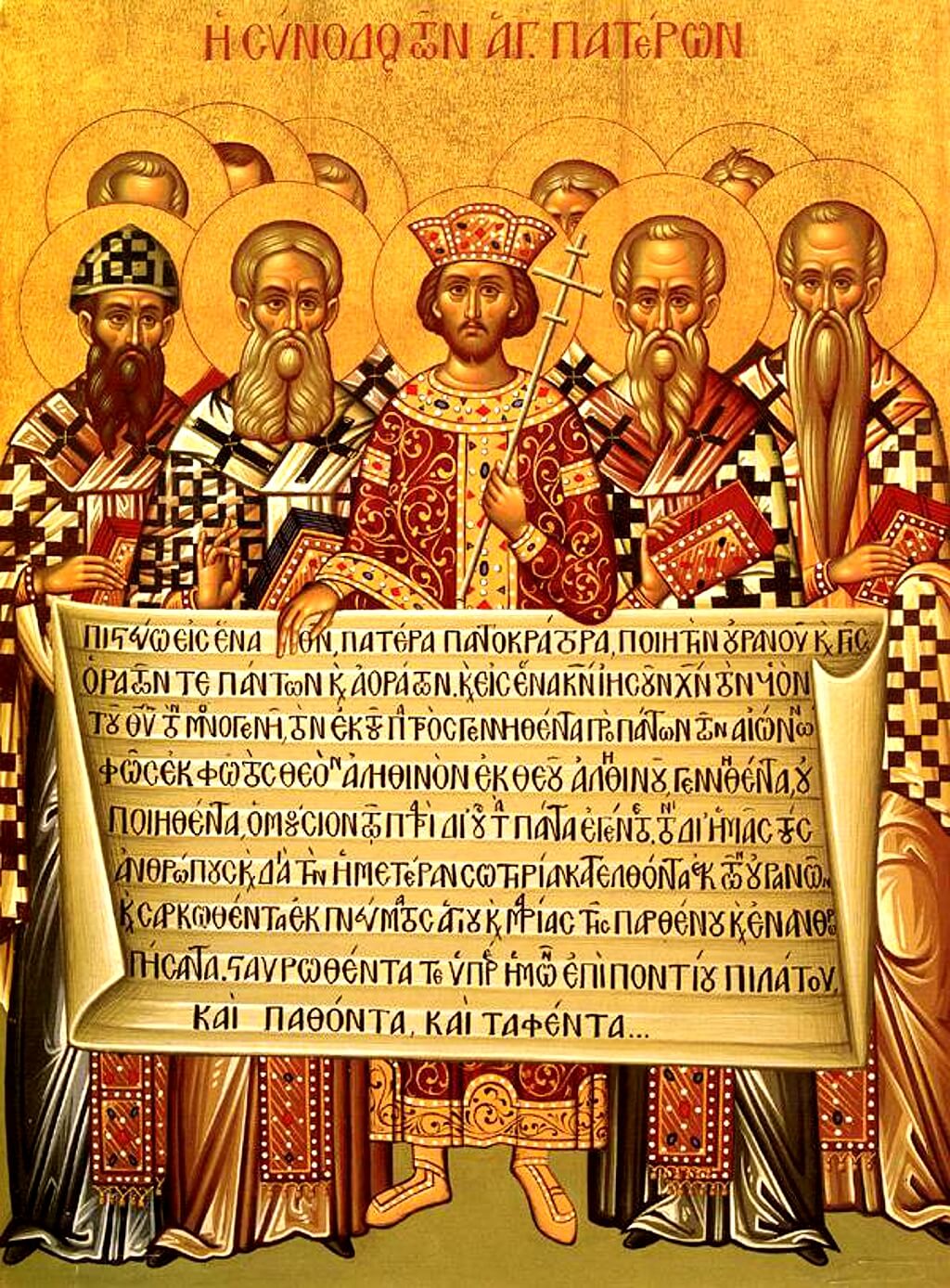
Creedal Christians: The Nicene Creed
Posted by Luke J. Wilson on 2nd June 2019 in Early Church | nicene creed,nicea council,creeds,creedal christians,creedal
The Nicene Creed — what is it and why is it called that?
This creed gets its name from a time and place: the first ecumenical Church council held at Nicaea, which is now known as İznik in northwestern Turkey, in 325 AD.
Now that may raise another question for you: what is an ecumenical council? Well, to explain more about the Nicene Creed, we are going to have to take a look at The First Council of Nicaea in order to better understand why this creed was written.
First things first though; an “ecumenical council” is ideally a Church-wide meeting where all the Bishops from all across the Church come together to hold a very large and very important meetin...
Powered by WebBoss.io 3.7.1
Copyright © 2026 The Sacred Faith: Timeless Truths for Modern Minds. All Rights Reserved.
