
Blog Search Results


56 results for apostolic tradition
found
within the Blog
6 displayed out of 56 (0.76seconds)Page 1 of 10
What does the word "Catholic" mean?
Posted by Luke J. Wilson on 8th March 2021 in Etymology | catholic,church fathers,church history,etymology,roman catholic,eastern orthodox,Great Schism,Muratorian Fragment
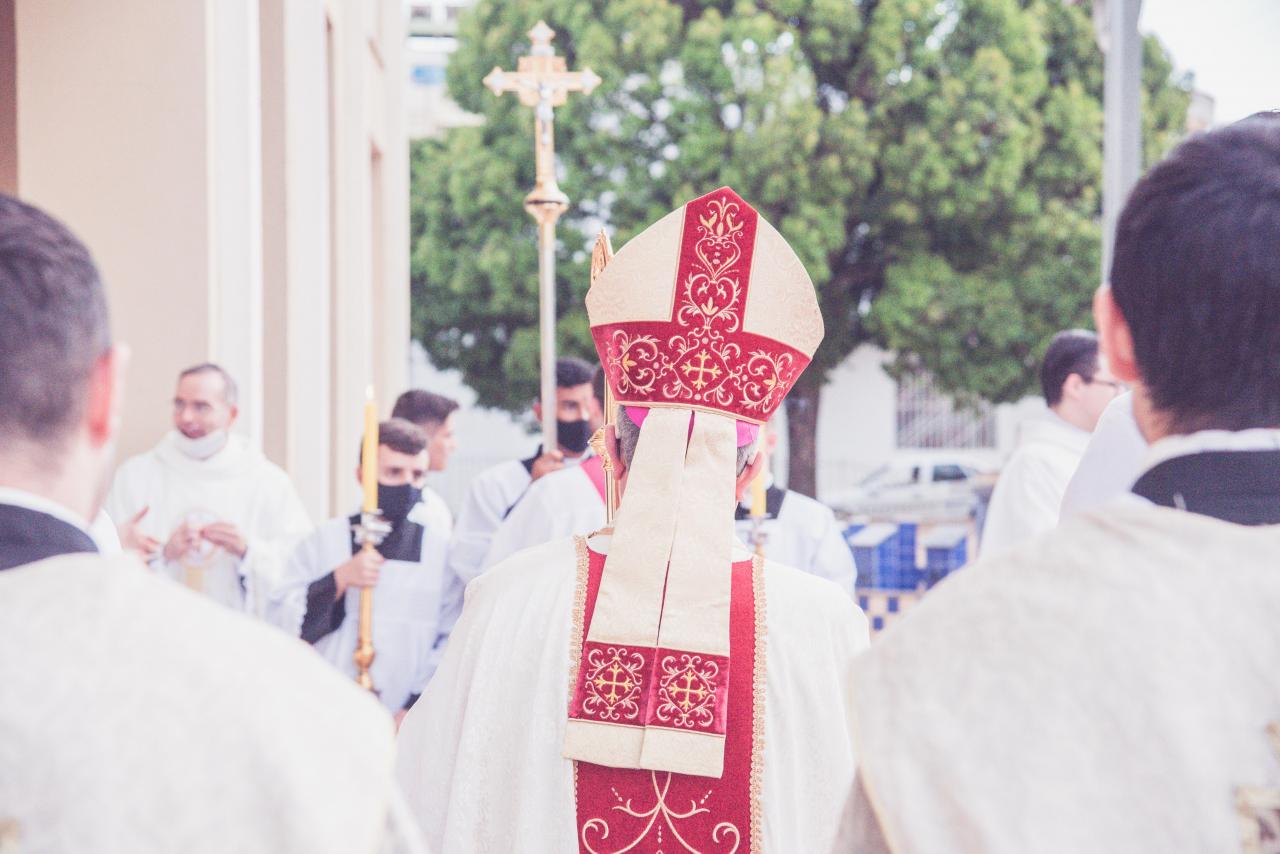
For many people today, non-Christians and (low church) Christians alike, when they hear the word “Catholic”, certain images spring to mind: the Pope, the rosery, Catholic school, big old churches buildings, choirboys, maybe monks or statues of Mary even; and sadly more recently, sex abuse scandals.
But, generally speaking, all of these are actually aspects of Roman Catholicism — a particular branch of Christianity, and not what the word “catholic” truly means as we’ll see when examining how the early church used the word and what the original Greek word means.
καθολικός (katholikos)
The Greek word where we get the English word “c...
Man-Made tradition vs apostolic tradition
Posted by Luke J. Wilson on 28th February 2016 in Early Church | early church,early church fathers,tradition,creeds,nicene creed,apostolic creed,man made tradition,apostolic tradition
...aid about apostolic traditions which were handed down to the bishops and churches by the Apostles themselves, and which were followed and contrasted with the Scriptures that those same apostles wrote. tradition wasn’t blindly accepted in the early church, but only followed if it could be shown to have originated with apostolic teaching, either by word or by letter; and if it were by word, it was checked against Scripture to make sure it was all in harmony.
That doesn’t necessarily mean they looked for “chapter and verse” (since chapter and verses didn’t exist in Scripture fully until 1553), but to see if what was being taught was consistent with the p...
Biblical Inspiration and the Canon: How We Got the Bible
Posted by Luke J. Wilson on 28th February 2025 in Early Church | canon,nicea council,nicene council,myths,church history,church fathers
...The Bible is often described as “God-breathed,” a phrase taken from 2 Timothy 3:16: “All scripture is inspired by God and is useful for teaching, for reproof, for correction, and for training in righteousness.” But what does it mean for Scripture to be “inspired,” and how did the books of the Bible come to be recognised as part of the canon — the authoritative collection of writings that make up the Bible? Were they really “decided” at the Council of Nicaea, as some popular myths claim?
Table of Contents
Understanding Biblical Inspiration
What is the Canon?
The Septuagint and the Deuterocanonical Books
How Were the Books of the Bi...
Does Easter Have Pagan Origins?
Posted by Luke J. Wilson on 22nd March 2021 in Easter | Easter,easter sunday,early church,church history,paganism,pagan roots,Ishtar,Eostre,fertility goddess
...iate from apostolic tradition.
But what this does show for certain is that Christians have been celebrating (and debating) Easter/Passover since at least AD 150, long before Constantine or even any other “pagan” influence could take hold.
Is the Name “Easter” really the Anglo-Saxon goddess Eostre?
In short: no.
There’s also no link between “Ishtar” and “Easter” either. Ishar was an ancient Near Eastern fertility goddess, but just because the names sound somewhat similar in English, it doesn’t mean there is any etymological connection at all. Ishtar is also originally Akkadian, which was a language spoken in Mesopotamia (modern-day Iraq an...
Creedal Christians: The Apostle's Creed
Posted by Luke J. Wilson on 11th October 2018 in Early Church | creedal christians,creeds,creedal,apostles,apostolic creed,apostolic tradition,rule of faith,early church fathers,early church
...The Apostle's creed — what is it and why is it called that?
Outside of the New Testament, this is one of the oldest creeds we have, dating back to the sixth – eighth century in its current form that is commonly known today, but having its origins much earlier — as far back as the second century in a shorter form known simply as the “Old Roman Creed”.
The Apostles creed is also sometimes referred to as the “Rule of Faith” as it is a summary of the Gospel and is the basis for pretty much all modern theology. The points of the creed cover all the major pillars of the Christian faith which aims to safeguard what is true orthodoxy (right belief), whic...
Using AI to bring the Early Church to the modern age!
Posted by Luke J. Wilson on 14th October 2023 in Technology | AI,chatbots,patristics,early church,early church fathers,tech
...Hello everyone, I've created and trained some AI chatbots on the writings of the apostolic Fathers!
You can ask them anything about the authors, the texts, topics, or quotes.
Give it a try and see what you think: apostolic Fathers Chatbot | Patristics.info
I've also made Irenaeus into an AI so you can go and have a chat with him about his works Against Heresies. The bot 'thinks' it is Irenaeus too, so you can ask it personal things as though you were talking to Irenaeus: AI Irenaeus | Patristics.info
And finally, introducing AI John Chrysostom as a similar AI which acts as the person so you can ask it questions in a more natural way: AI John Chrysostom | Pa...
Powered by WebBoss.io 3.7.1
Copyright © 2026 The Sacred Faith: Timeless Truths for Modern Minds. All Rights Reserved.
