
Blog Search Results


171 results for good people
found
within the Blog
6 displayed out of 171 (0.31seconds)Page 22 of 29

Understanding The New Testament: Inspiration, Canonisation, And Historical Context
Posted by Luke J. Wilson on 23rd December 2023 in Early Church | Inspiration,Scripture,early church,early church fathers,islam,Bible
A common modern perception of the inspiration of Scripture often portrays it as a rigid, divine dictation of words from God to be written down verbatim. This perspective leads to concerns among some religious communities, such as Muslims, who view any alteration or addition to the text as a potential threat to the entire faith. The Islamic understanding of inspiration emphasises direct and unalterable divine dictation, contributing to their scepticism of multiple Bible translations, which they falsely label as “corruption”.
In contrast, the Biblical inspiration of the Scriptures has never been viewed as a literal divine dictation, as if the apostles were un...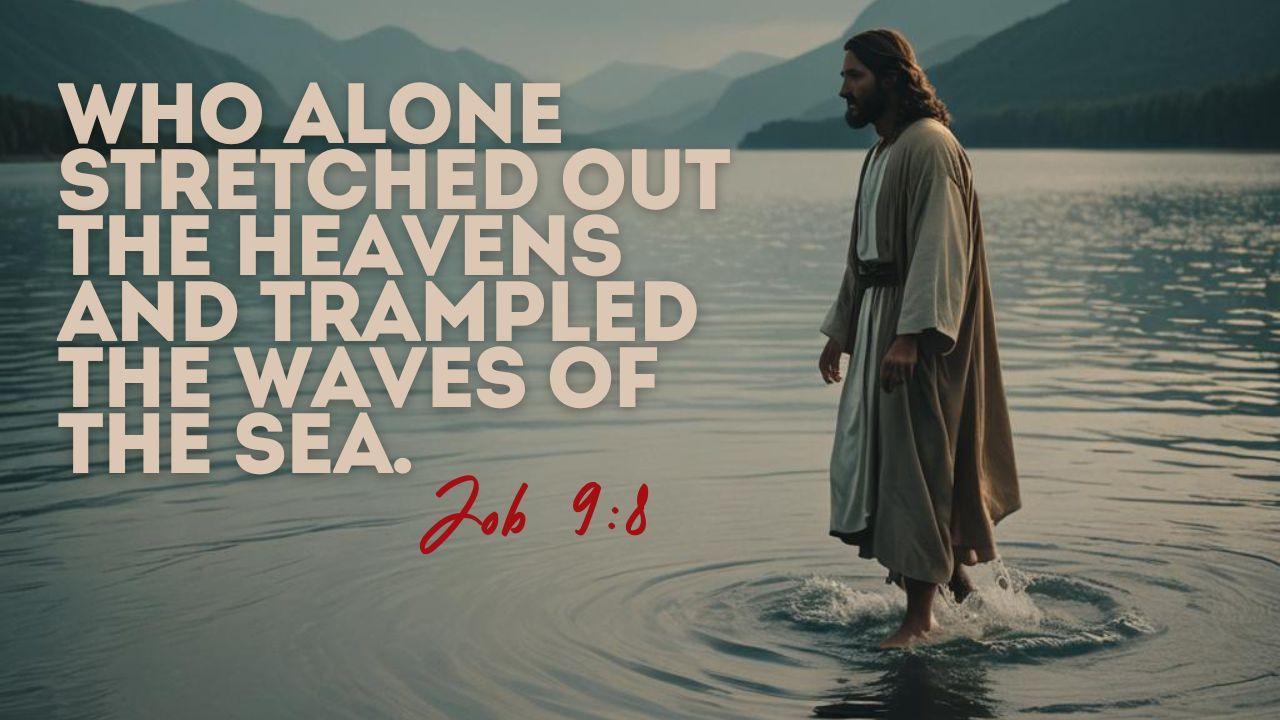
Jesus, Yahweh, And The Power Over The Storm
Posted by Luke J. Wilson on 29th July 2024 in Deity of Christ | Jesus,deity of christ,Yahweh,old testament,elements
Critics of Christianity will often make the claim that Jesus never said he was God or divine in the Gospels. The problem comes when they set unrealistic demands and expectations, like wanting a chapter and verse where Jesus says, “I am God, worship me”. But this isn’t how the Bible works and definitely not how Jesus went about his ministry.
Throughout the Gospels, there are clear connections that reveal the true nature of Jesus in ways that would have been obvious to the Jewish people and leaders of his day who were very familiar with the Torah and other Scriptures we now call the Old Testament. One of the most striking examples is His demonstration of po...
Biblical Inspiration and the Canon: How We Got the Bible
Posted by Luke J. Wilson on 28th February 2025 in Early Church | canon,nicea council,nicene council,myths,church history,church fathers
The Bible is often described as “God-breathed,” a phrase taken from 2 Timothy 3:16: “All scripture is inspired by God and is useful for teaching, for reproof, for correction, and for training in righteousness.” But what does it mean for Scripture to be “inspired,” and how did the books of the Bible come to be recognised as part of the canon — the authoritative collection of writings that make up the Bible? Were they really “decided” at the Council of Nicaea, as some popular myths claim?
Table of Contents
Understanding Biblical Inspiration
What is the Canon?
The Septuagint and the Deuterocanonical Books
How Were the Books of the Bi...
Why God Is Necessary For Morality
Posted by Darwin to Jesus on 16th April 2025 in Atheism | Fyodor Dostoevsky,Dostoyevsky,Atheism,morality
Guest post by Darwin to Jesus
Dostoevsky famously said, “If there is no God, then everything is permitted.”
For years, as an atheist, I couldn’t understand what he meant, but now I do…
Here’s a simple analogy that shows why only theism can make sense of morality:
Imagine you just got hired at a company.
You show up, set up your desk, and decide to use two large monitors.
No big deal, right?
But then some random guy walks up to you and says: “Hey, you’re not allowed to do that.”
You ask, “What do you mean?”
They say, “You’re not permitted* to use monitors that big.”
In this situation, the correct response would be: “Says who...
Lent: Day 4 - Polycarp to the Philippians
Posted by Luke J. Wilson on 4th March 2017 in Lent | Lent,great lent,fasting,early church fathers,devotional,daily reading,episle of Polycarp to the Philippians
Day Four: Epistle of Polycarp to the Philippians (full text)
Who: Polycarp of Smyrna, who was a direct disciple of the apostle John. We also have some information about Polycarp via Irenaeus (who knew Polycarp) in his book, Adv. Haer., III.3.4: “But Polycarp also was not only instructed by apostles, and conversed with many who had seen Christ, but was also, by apostles in Asia, appointed bishop of the Church in Smyrna”.
What: Lots of exhortations are contained in this letter, and is also referenced by Irenaeus as being for “those who wish to do so, and are anxious about their salvation, can learn the character of his (Polycarp's) faith, and the preachin...
Before The Pumpkins: Faith In The Flames
Posted by Luke J. Wilson on 25th October 2025 in Halloween | polycarp,martyrdom,halloween
Picture the scene: the year is somewhere around 155–160, Polycarp has just been arrested and brought to the city. The crowd roared in the stadium. The smell of sweat and fear mingled with the dust of Smyrna’s arena. And in the centre of it all stood an old man — calm, unflinching, his face marked with years of faith. The Roman proconsul urged him again: “Swear by the fortune of Caesar. Curse Christ, and I will release you.”
Polycarp looked him in the eye and replied with a defiant response that has echoed down the ages,
Eighty and six years I have served Him, and He has done me no wrong. How can I blaspheme my King who saved me?
Those words hav...
Powered by WebBoss.io 3.7.1
Copyright © 2026 The Sacred Faith: Timeless Truths for Modern Minds. All Rights Reserved.
