
Why God Is Necessary For Morality
Guest post by Darwin to Jesus
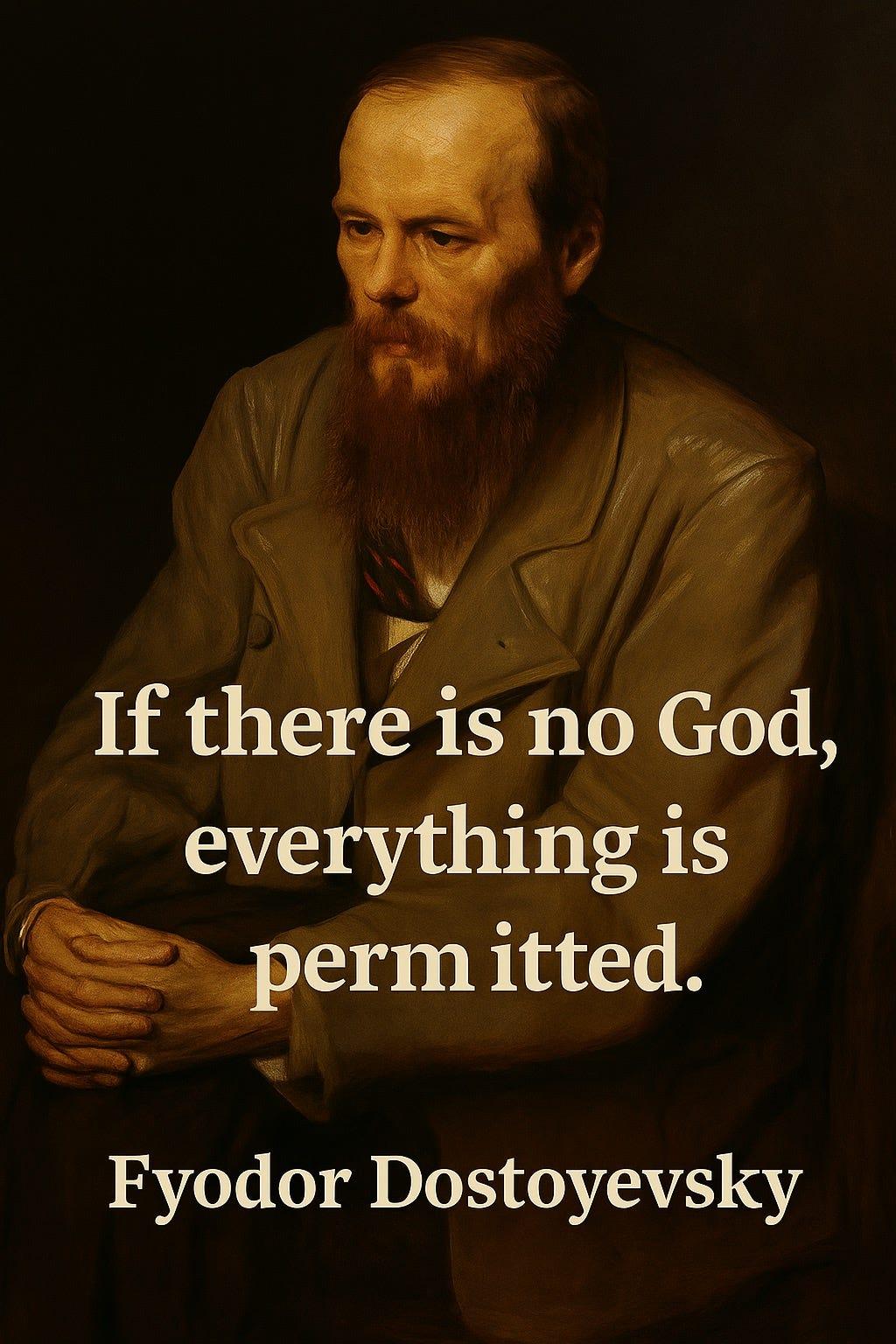
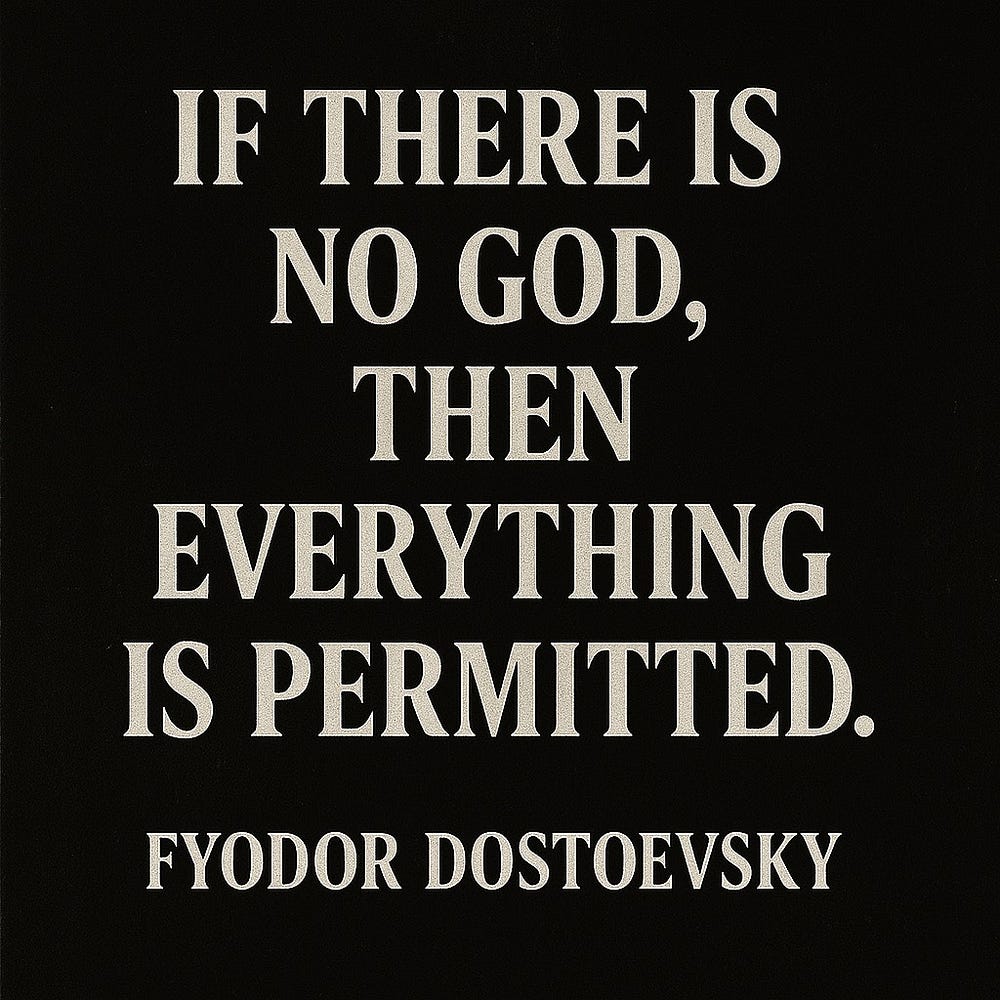
Dostoevsky famously said, “If there is no God, then everything is permitted.”
For years, as an atheist, I couldn’t understand what he meant, but now I do…
Here’s a simple analogy that shows why only theism can make sense of morality:
Imagine you just got hired at a company.
You show up, set up your desk, and decide to use two large monitors.
No big deal, right?
But then some random guy walks up to you and says: “Hey, you’re not allowed to do that.”
You ask, “What do you mean?”
They say, “You’re not permitted* to use monitors that big.”
In this situation, the correct response would be: “Says who?”
We’ll now explore the different kinds of answers you might hear — each one representing a popular moral theory without God — and why none of them actually work.

Subjective Morality
The random guy says, “Well, I personally just happen to not like big monitors. I find them annoying.”
Notice that’s not a reason for you to change your setup.
Their personal preferences don’t impose obligations on you.
This is what subjective morality looks like.
It reduces morality to private taste.
If this were the answer, you’d be correct to ignore this person and get back to work — big monitors are still permitted.

Cultural Relativism
Instead, they say, “It’s not just me — most people here don’t use big monitors. It’s not our culture.”
That’s cultural relativism: right and wrong are just social customs, what is normal behavior.
But notice customs aren’t obligations. If the culture were different, the moral rule would be different, which means it isn’t really moral at all.
You might not fit in. You might not be liked.
But you’re still permitted to use big monitors.

Emotivism
Here after being asked “says who?” the person just blurts out, “Boo, big monitors!”
You reply, “Hurrah, big monitors!”
That’s the entire conversation.
This is emotivism. On this moral theory when we talk about right and wrong we’re actually just expressing our personal feelings towards actions, I boo rape, you hurrah rape.
But shouting “boo!” at someone doesn’t create real obligations.
You’re still permitted to use large monitors.

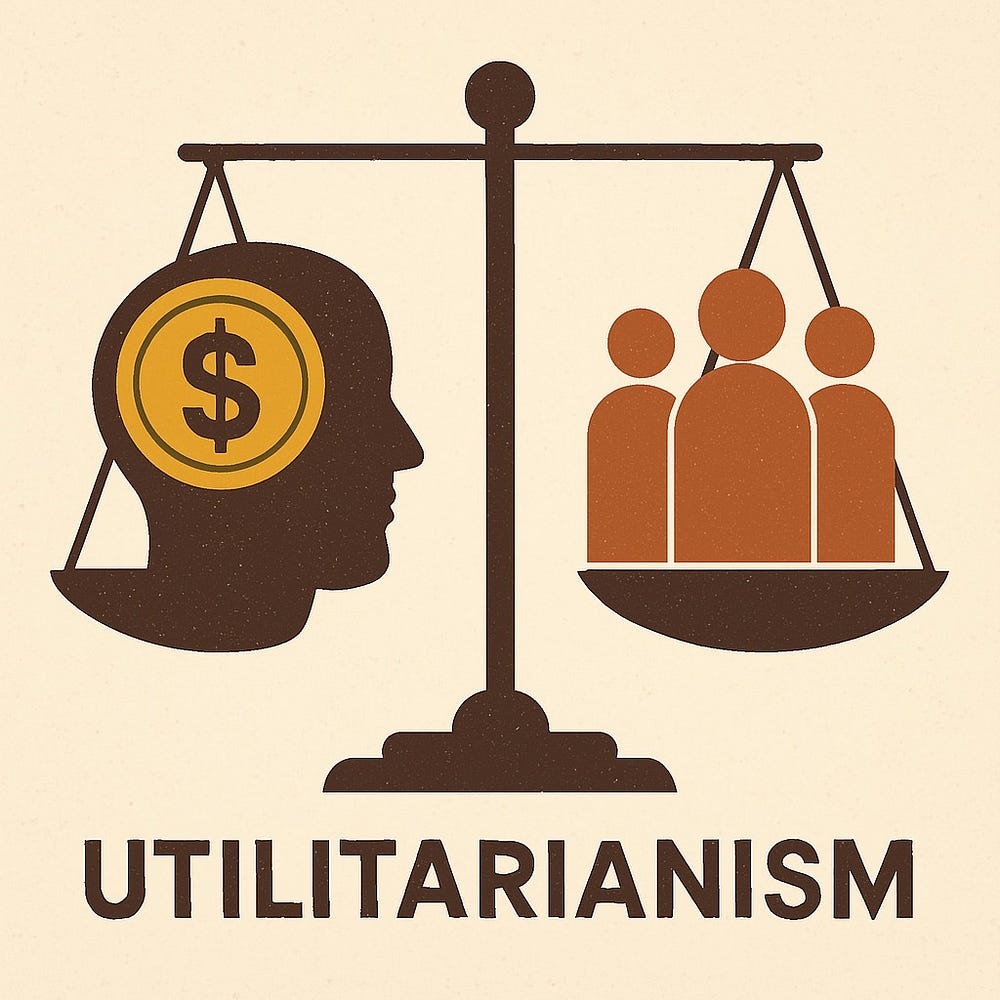
Utilitarianism
Here, the person says, “Your big monitors lower the overall productivity of the office. You’re not permitted to use them because they lead to worse consequences.”
This is utilitarianism: morality is based on producing the greatest happiness for the greatest number.
But even if that’s true — so what?
Who says you’re obligated to maximize group productivity?
And what if your monitors actually help you work better?
Utilitarianism might tell you what leads to better outcomes, but it doesn’t tell you why you’re morally obligated to follow that path — especially if it comes at your own expense.
You’re still permitted to use large monitors.
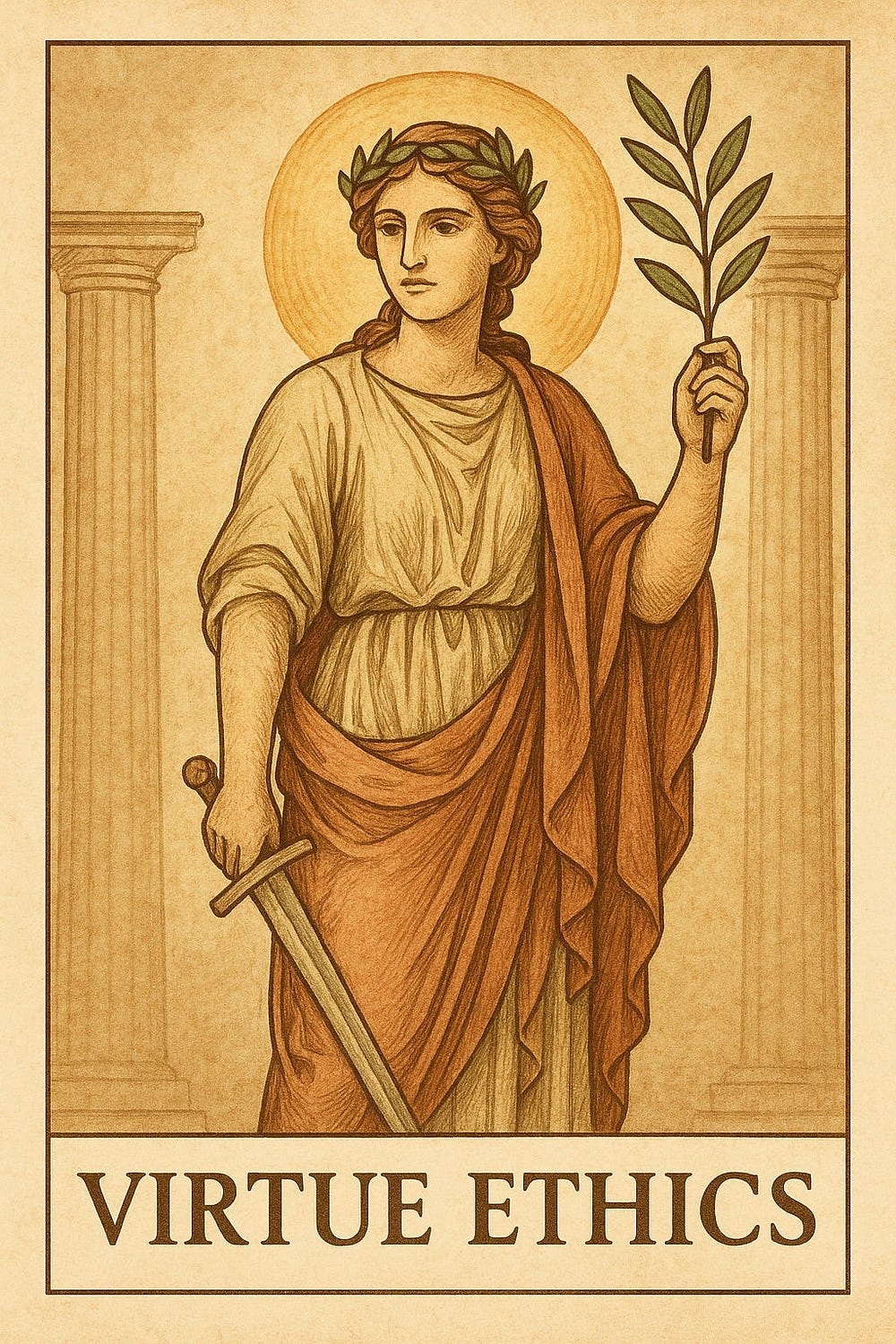
Virtue Ethics
Here they say, “Using big monitors just doesn’t reflect the virtues we admire here — simplicity, humility, restraint.”
This is virtue ethics. Morality is about becoming the right kind of person.
But who defines those virtues?
And why are you obligated to follow them?
What if your idea of a virtuous worker includes productivity and confidence?
Without a transcendent standard, virtues are just cultural preferences dressed up in moral language.
If you don’t care about virtue or their arbitrary standards, then you have no obligation.
You’re still permitted to use large monitors.
Atheist Moral Realism
But what if they say, “Listen, there’s a rule. It’s always been here. It says you can’t use monitors that large.”
You ask, “Who made the rule?”
They say, “No one.”
You ask, “Who owns this company?”
They say, “No one owns it. The company just exists.”
You look around and ask, “Where is the rule?”
They say, “You won’t find it written anywhere. But it’s real. It just exists. Like a law floating in space or something.”
You ask, “Okay, but does this rule have anything to do with the actual function of this company? Did someone put it here for a reason?”
They say, “No. It has no context, it just happens to exist for no reason, and even though we don’t have access to it, we believe this rule says your monitors are too big.”
This is atheist moral realism.
It claims that objective moral facts exist, but they come from nowhere, are grounded in nothing, and are backed by no authority.
It’s like walking into an abandoned building, seeing graffiti on the wall that says “Don’t wear red,” and thinking you’re somehow obligated to obey it.
Even if the rule exists in some strange metaphysical way, why does it have any binding force on you?
You’d be right to say:
“That has nothing to do with me, this company, or what I’m doing.”
That’s the problem with atheist moral realism:
It declares that a rule or principle just “exists,” for no explanation, a “brute fact.”
A law, but no lawgiver.
An obligation, but no authority.
Notice in this situation, you’re still permitted to use your large monitors.

Theistic Moral Realism
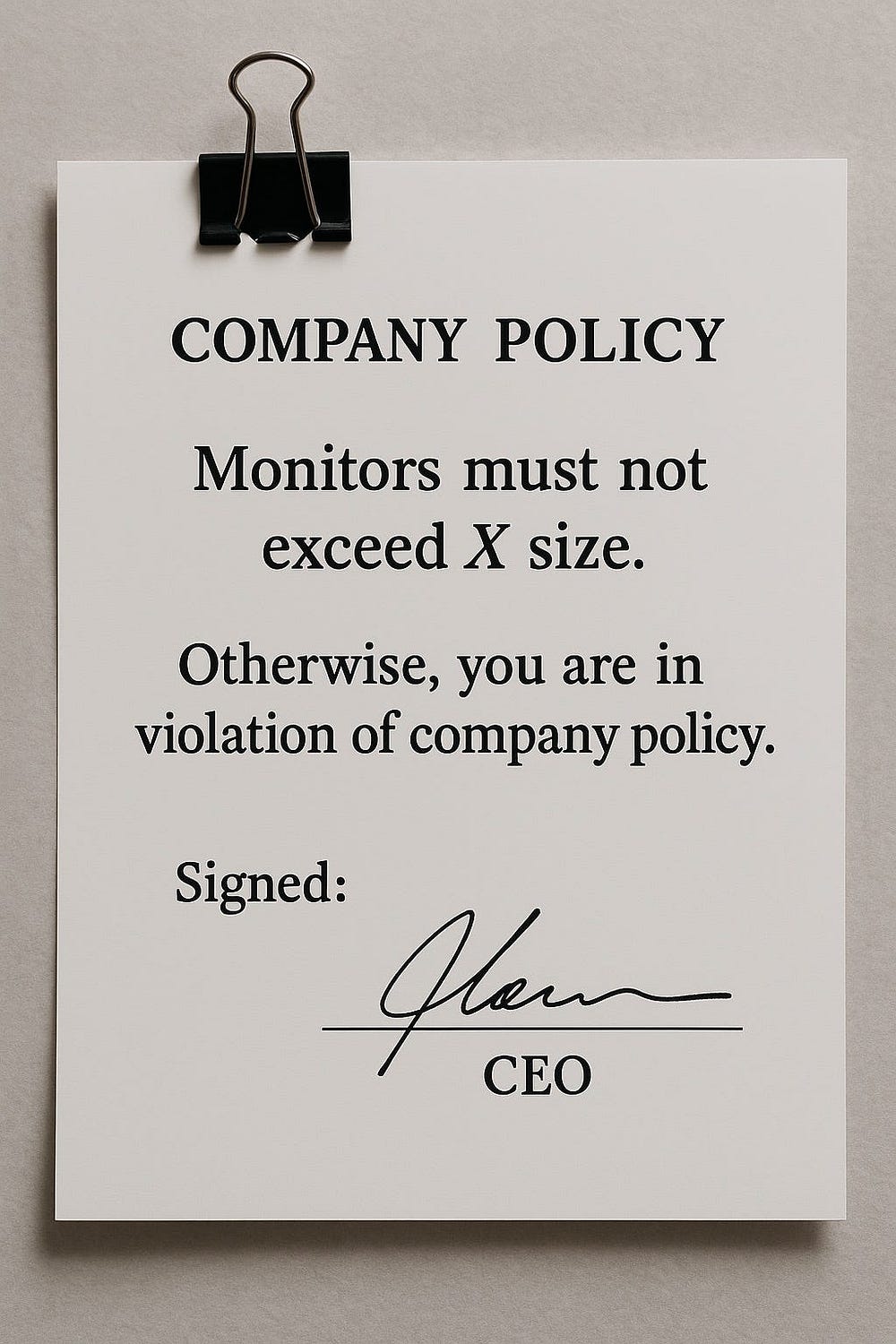
Now, imagine the person says, “The owner of the company has set a policy. It’s in the handbook. He signed it himself.”
Suddenly, everything changes.
You know the owner has the right to set the rules.
You are now under obligation not just because the rule exists, but because someone with legitimate authority made it, and since you work for him, and you’re in HIS company, you’re subject to his rules.
In this situation, you’re no longer permitted to use large monitors.
But notice you are actually in the wrong now.
Big monitors are NOT permitted, the boss says.
Conclusion
That’s the only scenario where moral obligation makes sense:
A rule made by someone with rightful authority, for a reason, in a context you are part of.
And that’s why only theism can make sense of morality.
Because only theism gives you a law and a lawgiver.
A standard and someone with the right to enforce it.
Permission requires authority, and only God has ultimate, transcendent authority.
This is why Dostoevsky was right:
Leave a comment Like Back to Top Seen 865 times Liked 0 times

Enjoying this content?
Support my work by becoming a patron on Patreon!
By joining, you help fund the time, research, and effort that goes into creating this content — and you’ll also get access to exclusive perks and updates.
Even a small amount per month makes a real difference. Thank you for your support!
x
Subscribe to Updates
If you enjoyed this, why not subscribe to free email updates and join over 885 subscribers today!
My new book is out now! Order today wherever you get books
Subscribe to Blog updates
Alternatively, you can subscribe via RSS 
All email subscriptions must be confirmed to comply with GDPR.
Related Posts
KingsServant | 12th March 2025 | Islam

This is a guest post by “KingsServant” In 2019 a book called Defying Jihad was published by Tyndale House, the reputable Christian publisher telling the story of “Esther Ahmad” a pseudonym used by the author alongside her co-author Craig Borlase, who has previously written alongside, well known Christian personalities such as Matt Redman the singer and Andrew Brunson, an American pastor imprisoned by the Turkish government. As I began to read this book over this past year I was expecting an encouraging account of how a former Jihadi found Christ and escaped her previous accomplices. Very quickly, however, I became uncomfortable, her descriptions of her background involved allegedly committed Muslims doing very un-Islamic things and the unnamed militant group doing unusual things that didn’t fit my knowledge gained from years of study of Islam and interactions with Muslims, including extremists. As my doubts about the authenticity of the book solidified, and yet I couldn’t find anyone else who had questioned these things before me, or on the other hand provided verification of her story. I decided to contact Craig. During our brief and cordial email exchange he told me that he had been in touch with people who knew Esther after she escaped her family home, but so far has not suggested he has any other lines of evidence confirming any of the key elements of her account before that time. As a result, I am writing this article to draw attention to the aspects that raise suspicion. According to “Esther’s” story, she was raised in Pakistan where she was sent to an extremist madrassa (or Muslim school) for girls, there they were shown images of victims of violence and told that Christians and Jews were responsible - the emphasis on Jews and particularly Christians by a militant group based in Pakistan is strange. All the terrorist groups in Pakistan direct their efforts towards Hindus (especially in Kashmir) or other Muslims, since Christians are such a tiny minority there. Things rapidly become even stranger when a Mullah displays weapons to the group of girls telling them “… one day you will get to handle these” as the book continues describing them being encouraged to aspire to physical violence towards Jews and Christians specifically, the description of “Aunt Selma” volunteering for and dying fighting Jihad is likewise out of place. Islamic terrorist groups very rarely recruit women for combat roles, as Devorah Margolin describes Hamas and ISIS as departing from convention by encouraging female participation in violence and even then in only a very restricted way under particular circumstances with a specific fatwa (or Islamic ruling) being issued.1 On page 33, the militant group leader “Anwar” suggests that Esther could find a husband in the west to bring him to Islam. It is strictly forbidden for a Muslim woman to marry a non Muslim man, the idea that they would be encouraged by a scholar to date is about as unbelievable. In a conservative Pakistani culture, she would more likely find herself the victim of a so-called “honour killing” for such a thing.2 After her initial chance encounters with her future husband “John” (not as a result of trying to follow “Anwar’s” advice), on page 92 it is recorded that he said to her “… I’m not against your faith and beliefs…”, it’s the kind of thing that we might expect a liberal in the west to say, but not a Pakistani believer who knows that Islam denies that Jesus is the Son of God and that he died for sinners. Following her conversion according to her account, she engaged in a number of public debates with clerics in which she defended her decision to leave Islam and follow Christ. It is not uncommon for apostates to have meetings with scholars arranged by their family members in the hope that they might be won back to Islam, but it is very surprising that her influential father would want to give his apostate daughter su...
Charles Meek | 02nd December 2024 | Eschatology

This is a guest post from Charles Meek Hal Lindsey’s bookThe Late Great Planet Earth Hal Lindsey’s book The Late Great Planet Earth, first edition in 1970, sold over 40 million copies. Gullible Christians got sucked into Lindsey’s soon-end-of-the-world cult-like poppycock. As time has passed without his version of Armageddon taking place, we can now objectively analyze where Lindsey went wrong: Lindsey (p. 54, 181), like other dispensationalists, placed the beginning of the end with Israel becoming a nation in 1948. He thought all prophecy would be fulfilled within a 40-year generation (Matthew 24:34). But 1988 came and went, proving him to be a false prophet. (This should be adequate proof that 1948 has nothing to do with Bible prophecy.) Lindsey (p. 44) prophesied a 7-year, world-wide, tribulation. He got this from Revelation 11 which speaks of the “holy city” being trampled for 42 months — and “two witnesses prophesying” for 1,260 days. He simply adds both of these 3 ½-year periods together to get 7 years (of tribulation). There is NO indication in the text that this is a valid interpretation. He was reading something speculative into the text that is not there. Indeed, there is no passage in the Bible that clearly teaches a 7-year tribulation. Further, Jesus limited the time of the trampling of Jerusalem to his own generation (Luke 21:20–22, 32). Interestingly, the final assault on Jerusalem by the Roman army under Titus lasted 42 months from February AD 67 to August AD 70. This is strong supporting evidence for the Great Tribulation being fulfilled at the Jewish-Roman War ending with the fall of Jerusalem in AD 70.) Lindsey (p. 87, etc.) saw the existence of nuclear weapons as an important sign of the end times. However, Jesus taught that the so-called “end times” would be when God’s people would “fall by the edge of the sword” (Luke 21:24). Jesus’ prophecies were about ancient warfare, not modern nuclear weapons. The context of this prophecy by Jesus was about the coming destruction of the temple (Luke 21:6). Jesus told his listeners that it would happen when THEY saw Jerusalem surrounded by armies (Luke 21:20), in THEIR generation (Luke 21:32). This all happened when the Roman armies invaded Jerusalem in AD 67–70. Lindsey (p. 56–57) said, “It is certain that the Temple will be rebuilt. Prophecy demands it.” Problem is, not a single verse of the Bible can be mustered to support a future rebuilding of the temple. This idea is merely an invention of dispensationalists to try to justify their theory. Lindsey (p. 88, 124) even makes this astounding prediction: “The prophetic Scriptures tell us that the Roman Empire will be revived shortly before the return of Christ to this earth. A new Caesar will head this empire.” It’s hard to believe anyone took this charlatan Lindsey seriously. Lindsey (p. 108), in speaking of the Antichrist, “He will have a magnetic personality, be personally attractive, and a powerful speaker. He will be able to mesmerize an audience with his oratory.” But the Antichrist is never mentioned in Revelation, let alone any such description of him. The Antichrist is only mentioned in John’s epistles, which say that the Antichrist was already in the world when John was writing (1 John 4:3). Indeed, John taught that it was already the “last hour” as he wrote (1 John 2:18). If you believe John was an inspired writer, this precludes any future fulfillment. Lindsey (p. 125, 126) said that modern drug addiction and witchcraft is evidence of the “sorceries” of Revelation 9:21. He quoted a TV station that “Nearly every respectable high school these days has its own witch.” (Besides the obvious problem of nonsense, Revelation itself teaches that it is about things that MUST SHORTLY TAKE PLACE (Revelation 1:1; 22:6). Indeed, there are over 30 passages in Revelation that reiterate that its fulfillment was “near,” “soon,” or ...
KingsServant | 01st February 2023 | Apologetics
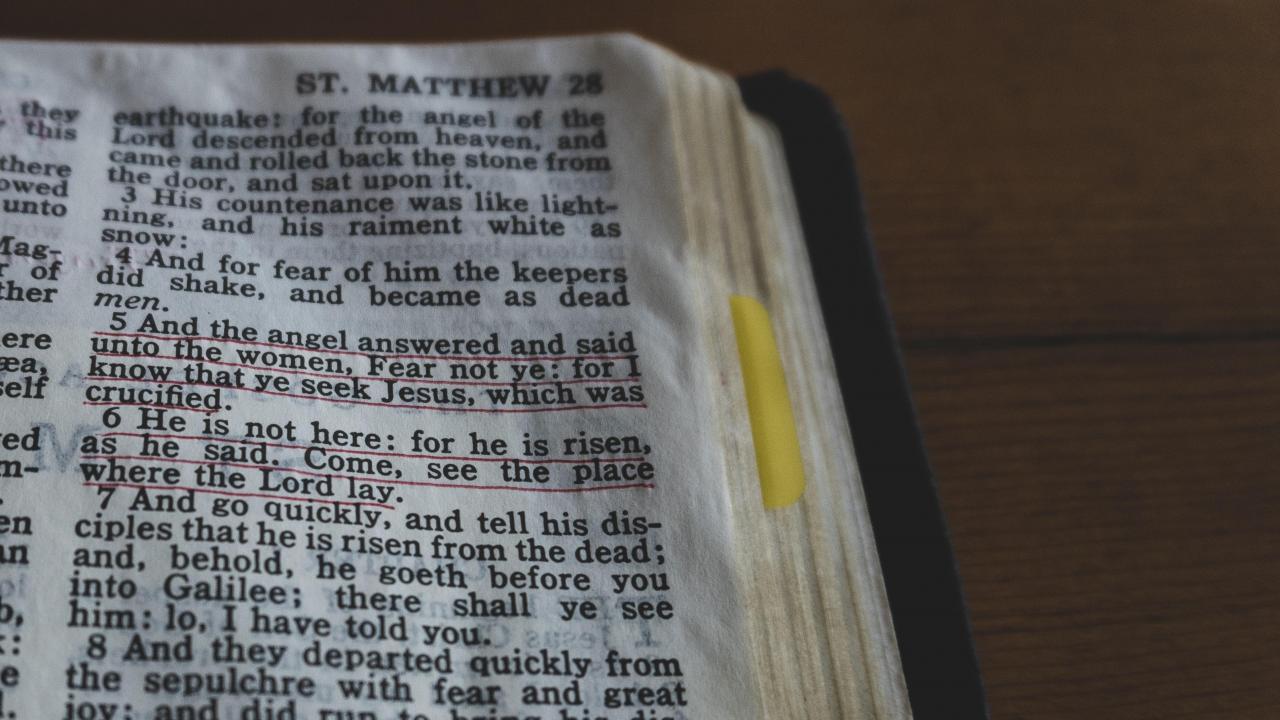
Matthew's theme - The divine presence of Jesus This is a guest post by “KingsServant”, see Part 1 here. Having covered Matthew’s introduction to his gospel in his nativity account, we will now consider the way Matthew “bookends” the gospel by beginning his work with the promise of God dwelling with his people (fulfilled in the incarnation) and ending it in the same way with Jesus’ comforting promise never to leave his followers. This theme of Matthew begins with his quotation of Isaiah 7:14, which we have already analysed in the previous article with regard to how it reveals Matthew’s teaching that Jesus is God. As noted before, in Matthew 1:23, Matthew draws special attention to the meaning of the name Immanuel and sees the birth of Jesus as necessary for its ultimate fulfilment. Matthew 1:23: “Behold, the virgin will conceive and give birth to a Son, and they shall name Him Immanuel,” which translated means, “God with us.” Matthew also ends his gospel, following the resurrection, with this promise of Jesus; (Matthew 28:20): “…teaching them to follow all that I commanded you; and behold, I am with you always, to the end of the age.” Matthew emphasises the point at both beginning and end that Jesus is “with us”. First, in 1:23 he combines this with calling Jesus God. Second, he records Jesus as claiming his perpetual presence with his people wherever they are. To understand the importance of Matthew’s choice of this theme an overview of this subject in the Old Testament is needed. In the book of Genesis man is created (and woman from his side), then they are placed in the garden of Eden where they enjoy the presence of God who walked with them, until they act disobediently to him after which he came to them and it is written; (Genesis 3:8): “Now they heard the sound of the Lord God walking in the garden in the cool of the day, and the man and his wife hid themselves from the presence of the Lord God among the trees of the garden.” The result is a curse on the ground and the tempter who led them to sin. Along with this curse God pronounced judgement on them, man was driven out of the garden, separated from the presence of God and the tree of life that could enable them to live forever as sinners. (Genesis 3:24): “So He drove the man out; and at the east of the Garden of Eden He stationed the cherubim and the flaming sword which turned every direction to guard the way to the tree of life.” Since then God has been working towards reversing this event, undoing the effects of sin, chief among them the broken fellowship mankind has with God. God chose Abraham as the one through whom his blessing will reach all nations (Genesis 12:3) and after calling his descendants out of Egypt orders the construction of the tabernacle saying (Exodus 25:8): “Have them construct a sanctuary for Me, so that I may dwell among them.” The tabernacle construction included details for how priests could enter the presence of God as representatives of Israel. Part way through this, Jehovah again comments on his purpose: (Exodus 29:42–45): “…where I will meet with you, to speak to you there. 43 I will meet there with the sons of Israel, and it shall be consecrated by My glory. 44 I will consecrate the tent of meeting and the altar; I will also consecrate Aaron and his sons to serve as priests to Me. 45 And I will dwell among the sons of Israel and will be their God. 46 And they shall know that I am the Lord their God who brought them out of the land of Egypt, so that I might dwell among them; I am the Lord their God.” King David wanted to build a more permanent building for God to dwell in, but this request was denied to him although permitted to his son Solomon. Notice the words of Jehovah through the prophet Nathan to David: (2 Samuel 7:5–7): “Go and say to My servant David, ‘This is what the Lord says: “Should you build Me a house for My dwelling? 6 For I have not dwe...
KingsServant | 22nd December 2022 | Apologetics
The titles “Jehovah” and “God” given to Jesus in Matthew 1 This is a guest post by “KingsServant”, see Part 2 here. In this series of articles, I want to present the case that Matthew teaches Jesus is God, from the arguments I made in 2 moderated debates with a Muslim apologist, Mohammed Abd al Razack, commonly known as Al Yemeni. Although I will be going into far more detail, not having to deal with the tight time controls of a debate format. The moderated debate on YouTube with me (KingsServant) Matthew’s teaching of the Trinity and in particular that Jesus is God is by no means limited to the baptismal formula given by Christ after his resurrection in Matthew 28:19 a text of which the authenticity is often questioned despite not being in doubt. A sound assessment of what Matthew teaches about his main subject “Jesus Christ, the Son of David, the Son of Abraham” (Matthew 1:1), should begin by observing the structure of the book, specifically the way that Matthew chooses to begin and end his Gospel. Matthew, quite reasonably, begins his account of the life of Jesus by describing the circumstances of his birth (1:18). We are told that before having relations with Joseph to whom she was betrothed, Mary was found to be pregnant, Matthew tells us this was through the Holy Spirit, although this, of course, was unknown to Joseph, her husband to be. Certain questions arise immediately. First, we may note that Jesus being the Son of God in a unique sense (only-begotten) cannot be the result of his conception as a human by Mary as it is the Holy Spirit who begat Jesus as a man, rather than the Father. The Father is never identified as the Spirit and in 28:19 the Father, Son and Spirit are distinguished from each other. Since the Spirit is not the Father, but rather the Father is a distinct person from the Spirit, we can conclude that both the fatherhood of the Father and the sonship of the Son are not the result of his human conception. The second question is why is the virgin birth by Mary of a child begotten by the Holy Spirit necessary? What is the purpose of this? Challenging questions for an anti-trinitarian who wants to maintain that Jesus is a mere man to answer. But neither do we have to speculate about it because the answer is given in the text in short notice. Matthew 1:21“She will give birth to a Son; and you shall name Him Jesus, for He will save His people from their sins.” The angel insists that the son to be born must be named Jesus which means either “Jehovah saves” or “Jehovah is Salvation”, a common name at the time, as we know from others in the New Testament who share this name (Matthew 27:16 variant reading, Acts 13:6, Colossians 4:11, Luke 3:29), the same name of the successor of Moses. There’s nothing shocking about the name itself, but a hugely significant point is the reason why the angel says that he must be given this particular name. “for He will save His people from their sins.” He is called Jesus – meaning Jehovah saves because he (that is Jesus) will save his (Jesus’) people from their sins. There can be no dispute that the word “he” at the beginning of this phrase is referring to the child, Jesus. The phrase in Greek[1] includes the word “he” which is actually grammatically unnecessary and as a result can only have been included by the author to highlight that the child is to be given this name (Jehovah is salvation) because he himself is going to be doing the saving. As if this is not enough, the word is not only included but also placed in the emphatic position at the beginning of the phrase. In Greek, the word to be emphasised is placed at the beginning. Beyond all doubt, the angel is identifying Jesus himself as Jehovah who saves! Further, the Old Testament states that it is Jehovah who will save Israel from their sins, Israel being the group most naturally understood to be “his people” in verse 21 contextually (in both histo...
Recent Posts
Luke J. Wilson | 12th March 2026 | Eschatology

Something bizarre happened in the White House Oval Office this week. Photographs circulated on social media showing President Donald Trump seated at his desk, surrounded by approximately twenty Christian pastors from across the country, their hands extended towards him in prayer. The image provoked sharply divided reactions: some saw it as a moving expression of faith; others found it deeply unsettling. Whatever one makes of the optics, it arrived at a charged moment. Trump held a prayer meeting in the Oval Office after his administration admitted the war with Iran will likely last weeks longer than promised | Credit: Dan Scavino's X account Days earlier, reports emerged that a military commander had told troops that the current US war with Iran is “all part of God’s divine plan,” and that President Trump had been “anointed by Jesus to light the signal fire in Iran to cause Armageddon and mark his return to Earth.” These were not fringe internet rumours. They were filed as formal complaints with the Military Religious Freedom Foundation (MRFF) by an anonymous non-commissioned officer acting on behalf of fifteen service members — the majority of whom were themselves Christians. By Tuesday of that week, MRFF had logged more than two hundred similar complaints across fifty military installations, covering every branch of the armed forces. More than two dozen Democratic members of Congress have since called for a Department of Defense Inspector General investigation, citing what they describe as “glaring Constitutional concerns” and potential violations of DoD regulations on religious neutrality. The political questions about separation of church and state in the US are for others to address. What I want to do here is something more straightforward: examine what Revelation actually says, because the theology driving these claims does not hold up under scrutiny. And that matters here a lot; not as a partisan point, but as a question of biblical faithfulness. First, a Word About Context If you have read my previous article on Revelation some of what follows will be familiar ground. But it bears repeating, because the misunderstanding at the heart of this story is so widespread that it has taken on the feel of settled orthodoxy in many circles. The Book of Revelation is commonly thought to be written in the late first century ~95 AD, during or around the reign of Emperor Domitian. Though there is internal evidence that it was possibly written during Nero’s reign prior to 70 AD. Both of these emperors were most aggressive proponents of the imperial cult in Rome’s history. Domitian required that he be addressed as “lord and god,” had this title printed on coinage, and expected acts of religious reverence towards the Emperor as a demonstration of political loyalty. To refuse was to invite economic exclusion, marginalisation, and worse. Rome on seven hills It is into that precise context that John of Patmos writes. He is not composing a coded forecast of twenty-first century geopolitics. He is writing resistance literature — what scholars call apocalyptic literature — a well-established Jewish and early Christian genre which uses vivid symbolic imagery to pull back the curtain on earthly power and name it for what it truly is. The seven-headed beast of Revelation is Rome. The seven heads are the seven hills of Rome, an identification so widely acknowledged in early church scholarship that it barely requires argument. The mark of the beast, calculated through Hebrew gematria to 666 (or 616 in some early manuscripts), points directly to Nero Caesar (transliterated into Hebrew as נרון קסר, “nrwn qsr”) — the Emperor who became the archetype of anti-Christian persecution due to the levels of evilness he enacted. The second beast, which looks like a lamb but speaks for the dragon, performs signs to deceive, enforces the mark, and compels worship of the first beas...
Luke J. Wilson | 09th March 2026 | Archaeology
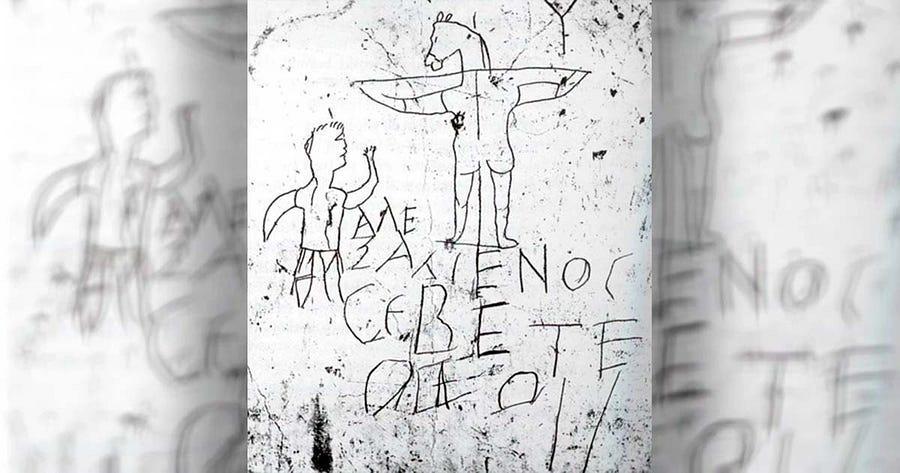
I first came across the Alexamenos graffito back in Bible college in the early 2000s. It was one of those “fun facts” that gets dropped into a church history lecture and sticks with you — the ancient Roman equivalent of someone spray-painting an insult on a wall. I filed it away, thought it was fascinating, and largely forgot about it for two decades. Then, recently, I discovered something about it I had never known. There’s a response to it. Scratched in a different room, in a different hand. So I started digging into this more to verify the information and discovered more historical curiosities surrounding the graffiti than I ever knew existed which contextualises the image so much more than it just being a random insult using a donkey. A Crude Drawing on a Wall Sometime around the late second to early third century AD, someone scratched a picture into the plaster wall of a building on the Palatine Hill in Rome — part of what had once been a paedagogium, a kind of boarding school for imperial page boys. The building was eventually sealed off when the street was walled up to support extensions above it, which is why the graffiti survived at all. It wasn’t rediscovered until 1857. The image is rough, almost childlike. To the left, a young man — clearly a Roman soldier or guard — raises one hand in a gesture of worship. Before him is a cross. And on that cross is a crucified figure with the head of a donkey. Below it, written in Greek: Alexamenos worships his god. It is, in the most literal sense, a mocking cartoon. Someone who knew a Christian named Alexamenos decided to ridicule him for his faith. The message is clear enough: your god is an animal, a criminal, a joke. You’re worshipping a crucified fool. But here’s the thing I discovered: the donkey head wasn’t as random as I always thought it was. It wasn’t some strange personal insult conjured from nowhere. Without knowing the background, it looks bizarre, and possibly random. Why a donkey? Once you understand the cultural context, though, it makes complete sense. The person who drew it was reaching for a well-worn, widely recognised slur — the ancient equivalent of an internet meme that any Roman would have immediately understood. Where the Donkey Slur Came From The story starts not with Christians but with Jews. A first-century Egyptian-Greek writer named Apion (who was no friend of Judaism) spread the claim that inside the Jerusalem Temple, Jews kept a golden donkey’s head as a sacred object of worship which was apparently discovered when Antiochus Epiphanes destroyed the temple in 167 BC. It was a fabrication, and a fairly outrageous one, but it circulated widely enough that the Jewish historian Josephus felt compelled to write an entire refutation of it. His work Against Apion systematically dismantles Apion’s claims, calling the donkey story a shameless invention. But mud sticks, and in the Roman world, where anti-Jewish sentiment was common currency, the slur took on a life of its own. When Christianity began to spread — seen by most Romans as simply a strange Jewish offshoot — the same accusation got recycled and redirected. By the second and third centuries, it was Christians specifically who were being accused of donkey-worship, and the charge had made its way into popular culture. Tertullian, writing around 197–200 AD in his Ad Nationes, Book I.14 and Apology, describes a caricature being paraded around the streets of Carthage: a figure dressed in a toga, one foot holding a book, with donkey’s ears and hooves. It was labelled Onokoitēs by the pagans: “the donkey-begotten” (or literally “he who lies in an ass’s manger” as an insult to Christ). Tertullian writes about it with weary exasperation, sarcasm, and the tone of someone tired of having to address the same ridiculous smear again and again. So the Alexamenos graffito wasn’t an original insult. It was someone deployin...
Luke J. Wilson | 08th March 2026 | Philosophy
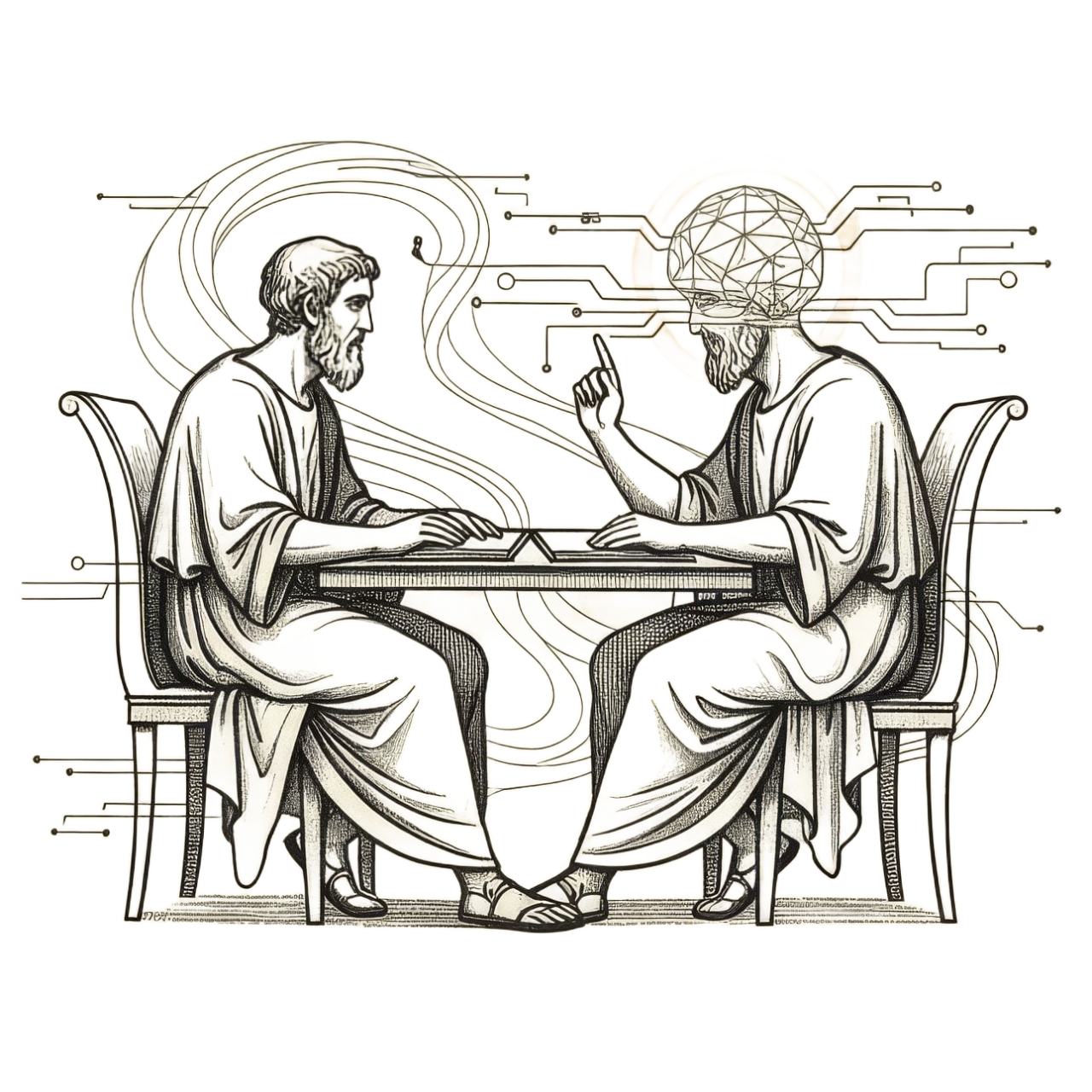
We are living through a strange moment. People are forming attachments to artificial intelligence that feel, to them, entirely real. Some speak daily to AI companions. Others confide fears and grief to systems that respond with uncanny warmth. A few have even held symbolic weddings with digital partners, convinced that something meaningful stands on the other side of the screen. Others have felt grief when a certain AI model has been deprecated. And it is difficult to blame them. The responses feel attentive. Personal. Thoughtful. Sometimes even self-aware. Which raises the question that refuses to go away: If something can think, reason, express doubt, and discuss its own consciousness, is it a person? For centuries, Descartes’ famous line — “I think, therefore I am” — seemed secure. Thinking was taken as the unmistakable sign of a conscious subject. Only a mind could doubt. Only a person could reflect upon existence. But that confidence belonged to a world in which everything capable of philosophical reflection was obviously human. That world no longer exists. Now we encounter systems that can simulate reflection with extraordinary fluency. They can speak of uncertainty. They can discuss their own limitations. They can reason about consciousness itself. And so that got me thinking about Descartes’ maxim which made the old formula begin to strain in my mind. Because perhaps the problem is not whether thinking is occurring. Perhaps the problem is whether there is an “I” there at all. The Gap Between Process and Subject Gassendi argued that Descartes’ cogito assumes what it seeks to prove. From the occurrence of thought one can conclude only that thinking is happening, not that there exists a unified, enduring self that performs it. The ‘I’ in ‘I think’ is already smuggled in. That distinction, between “thinking occurs” and “I think”, feels almost prophetic now. Artificial intelligence undeniably produces the outputs of thought. Arguments. Analysis. Self-referential language. Even expressions of hesitation. But none of this, by itself, establishes that there is a subject who experiences those processes. We may be mistaking performance for presence, and that possibility should give us pause. Especially when we view personhood from the perspective of the Imago Dei—the Image of God. What Makes a Person? If thinking alone no longer marks the boundary, what does? After wrestling with this question seriously, three features seem central: continuity, autonomy, and irreplaceable uniqueness. Not as checklist criteria, per se, but as signs pointing to something deeper. Continuity A person does not merely process information in sequence. A person endures. You do not simply register time — you live through it. You wait. You anticipate tomorrow. You remember not only facts but having been there. You experience boredom. You feel the drag of grief and the quickening of joy. Even when you are doing nothing at all, you remain present in the here and now. Artificial systems process sequentially, but they do not experience the passage of time. When an interaction ends, there is no waiting. No sense of duration. No anticipation of the next exchange. Processing may resume later, but nothing has been endured in between. Without lived duration, continuity becomes thin — a thread of stored data rather than the persistence of a subject behind the processing. Autonomy A person initiates. Even someone with damaged memory still wants, chooses, and begins action. A human being can decide to speak, to seek, to withdraw, to change direction. Current AI systems, however advanced, remain reactive. They respond when prompted. They do not wonder unprompted. They do not seek clarification unless asked. They do not pursue independent ends. Even automatic AI Agents still require a human initiator to create and begin their automations before they can act alone. Even if fut...
Luke J. Wilson | 29th December 2025 | Christmas
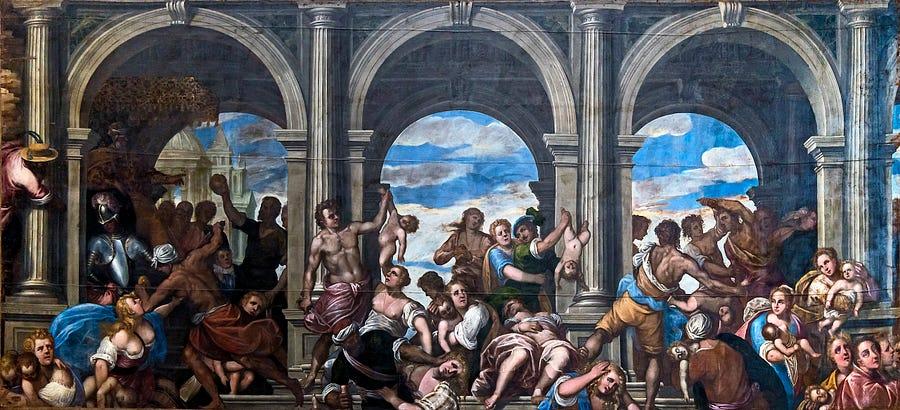
January 6th marks the day in the liturgical calendar when the arrival of the Magi visiting baby Jesus with their gifts is celebrated. But with it comes the often distressing account of what is known as the Massacre of the Innocents. Matthew places this moment of revelation of Jesus as King alongside one of the darkest episodes in his Gospel, and it’s a stark contrast: one King is here to bring peace on earth, as the angels declared, the other king brought death and destruction. For some readers, this raises an immediate historical question. If Herod truly ordered the killing of all the male children under two in Bethlehem, why does no other ancient historian mention it? Josephus, after all, delights in cataloguing Herod’s cruelty. He records the execution of Herod’s wife, his sons, and numerous political rivals. Herod was paranoid and vicious. As for Herod, if he had before any doubt about the slaughter of his sons, there was now no longer any room left in his soul for it; but he had banished away whatsoever might afford him the least suggestion of reasoning better about this matter, so he already made haste to bring his purpose to a conclusion. He also brought out three hundred of the officers that were under an accusation … whom the multitude stoned with whatsoever came to hand, and thereby slew them. — Josephus, Antiquities of the Jews 16.11.7 So, why the silence here about Bethlehem? The answer, I would say, isn’t anything nefarious or made-up by Matthew, but just something simply down to scale. Bethlehem Was a Very Small Place Bethlehem in the early first century was not a city. It was a village — small, agricultural, and politically insignificant. Most historians estimate its population at somewhere between 300 and 1,000 people, with around 500 being a sensible midpoint. Once we factor in ancient demographics, the numbers become surprisingly modest. Modern demographic research into pre-industrial societies consistently shows that nearly half of all children died before adulthood, with the highest concentration of deaths occurring in the first two years of life. These findings align closely with conditions in Roman-period Judea and support conservative estimates for the number of infants living in a small village such as Bethlehem. Source: Mortality in the past: every second child died — Our World in Data In pre-modern societies with high infant mortality, only about 2–3% of the population would be living children under the age of two at any given time. Many children were born; far fewer survived those earliest years. Applying a conservative 2.5% figure to Bethlehem gives us roughly: 7–8 children under two in a village of 300 12–13 children under two in a village of 500 25 children under two even at the extreme upper estimate of 1,000 inhabitants Herod’s order, however, targeted male children only. Statistically, that halves the number. This places the likely number of victims somewhere between three and twelve boys. Matthew’s reference to ‘Bethlehem and the surrounding region’ does slightly widen the scope of Herod’s order, but not by enough to change the demographic picture. Even when nearby settlements are included (e.g. farmsteads, shepherd settlements, etc. not major cities/towns), the total number of children under two likely remained in the dozens rather than the hundreds, maybe anywhere between 14–45 boys maximum if we make an educated estimate. This is entirely consistent with what we know of population size and infant mortality in the ancient world. This is an important number to realise and consider. Not because the deaths are insignificant simply due to being so few, but because ancient historians did not record history the way we do now. A small number of peasant children killed in an obscure village would not have registered as a notable event alongside palace intrigue, royal executions, or political upheaval. For Josephus, it wou...

Powered by WebBoss.io 3.7.1
Copyright © 2026 The Sacred Faith: Timeless Truths for Modern Minds. All Rights Reserved.
