
Blog Search Results


29 results for eastern orthodox
found
within the Blog
6 displayed out of 29 (0.50seconds)Page 4 of 5
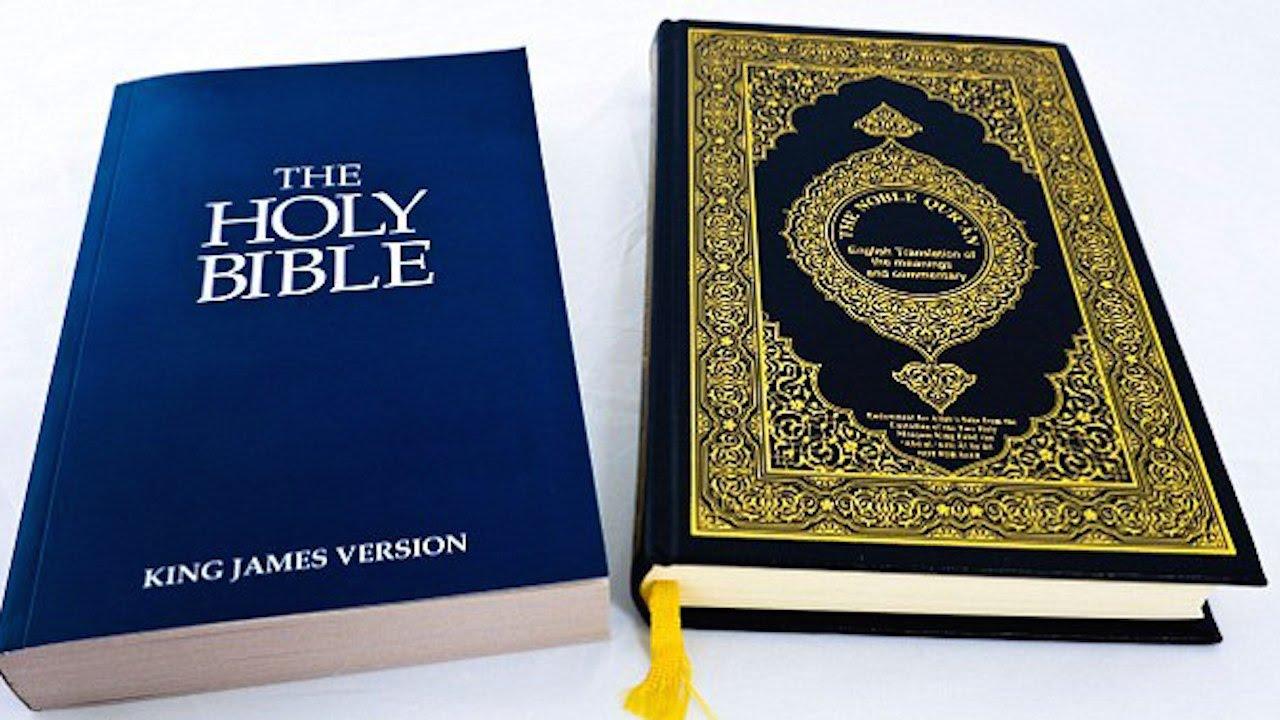
26 Differences Between Muhammad and Jesus
Posted by Luke J. Wilson on 17th October 2022 in Islam | Islam,Christianity,Jesus vs Muhammad,Islam vs Christianity,John of Damascus,church fathers,church history,religion
If you’ve ever spent any time online, either in random Facebook comment threads or reading the news, I’m sure you’ve come across the claim that Islam and Christianity are basically the same and that “we all worship the same God”, getting lumped together as an “Abrahamic religion” along with Judaism.
Muslims claim Islam “is the completed final version of the previous messages originally revealed to Moses and Jesus” which came to “correct the deviations of Christianity”, which had apparently become corrupt by the seventh century when Muhammad came along.
But for something which is meant to come from the same God at its core, it would sugges...
What is Advent?
Posted by Luke J. Wilson on 1st December 2023 in Christmas | Advent,christmas,second coming,parousia
It’s that time of year when Christmas lights and decorations go up, things start to look a little more sparkly, and kids are getting ready to open their Advent Calendars.
But what exactly is “Advent”? You may be from a Church tradition which recognises this each year so are more familiar, but if not, you may be curious to know more about this ancient Christian tradition.
Advent, derived from the Latin “adventus,” signifying “coming” or “arrival,” stands as a sacred season deeply entrenched in the hearts of many Christians globally. This period of expectant waiting and preparation marks the initiation of the liturgical year in Western Christia...
Biblical Inspiration and the Canon: How We Got the Bible
Posted by Luke J. Wilson on 28th February 2025 in Early Church | canon,nicea council,nicene council,myths,church history,church fathers
The Bible is often described as “God-breathed,” a phrase taken from 2 Timothy 3:16: “All scripture is inspired by God and is useful for teaching, for reproof, for correction, and for training in righteousness.” But what does it mean for Scripture to be “inspired,” and how did the books of the Bible come to be recognised as part of the canon — the authoritative collection of writings that make up the Bible? Were they really “decided” at the Council of Nicaea, as some popular myths claim?
Table of Contents
Understanding Biblical Inspiration
What is the Canon?
The Septuagint and the Deuterocanonical Books
How Were the Books of the Bi...
Important Updates about That Ancient Faith
Posted by Luke J. Wilson on 17th March 2023 in General Interest | updates,new branding,new logo,press release
I am excited to announce that the brand "That Ancient Faith" will be changing its name to The Sacred Faith.
As the readership of That Ancient Faith has grown, there has been a risk of confusion with the well-known orthodox Christian publisher and broadcaster “Ancient Faith”. To develop a distinctive look and to avoid any potential confusion, I have decided to rebrand the website as The Sacred Faith.
The Sacred Faith will continue to offer the same great content that readers have come to expect from That Ancient Faith. The website and social media channels will remain the same, with only the name and branding changing.
I'm excited about this new ch...
God from God: The Eternal Son in the Crib
Posted by Luke J. Wilson on 13th December 2025 in Christmas | advent,incarnation,xmas,christmas
How can God beget a Son? Does that mean Jesus is His creation?
This question comes sharply into focus during Advent, when the Church contemplates the Incarnation: the eternal Son entering the world as a baby in Mary’s womb. And to understand this, we turn to language the Church has treasured for centuries — especially that crucial distinction between begotten and created.
And C. S. Lewis describes this with a real concise clarity:
We don’t use the words begetting or begotten much in modern English, but everyone still knows what they mean. To beget is to become the father of: to create is to make. And the difference is this. When you beget, you beget...
What is Contemplative Prayer?
Posted by Luke J. Wilson on 9th February 2016 in Prayer | contemplation,prayer,meditate,meditation,waiting on the Lord,silence,Christian meditation,Lectio Divina
In the quiet, still silence, I await my God.
There seems to be some misgivings about the idea of “contemplative prayer” (also referred to as Christian Meditation) and in some of the descriptions I've read, I would agree that it can seem iffy.
Contemplation, or sometimes known as Lectio Divina, is in its most basic form, the idea and practice of waiting on the Lord. Often in silence or while you ponder on scripture or when you seek an answer or just to rest in his presence and have your strength renewed.
There are some people who think that this means “emptying your mind” and doing something akin to occultism, and ope...
Powered by WebBoss.io 3.7.1
Copyright © 2026 The Sacred Faith: Timeless Truths for Modern Minds. All Rights Reserved.
