
Blog Search Results


210 results for church history
found
within the Blog
6 displayed out of 210 (0.48seconds)Page 7 of 35

My new book, available now! Take a journey through the first 400 years of church history in only 40 days!
Posted by Luke J. Wilson on 2nd November 2018 in Early church | book,40 days,church fathers,church history,maps,reading plan,devotional,daily reading,daily devotional
Take a journey through the first 400 years of church history in only 40 days!
"40 Days with the Fathers" is a daily reading plan/devotional spread out over forty days; and over the course of this reading plan you will read extracts and commentary on 23 different early church texts from a selection of some of the most influential church Fathers, such as:
Didache, Diognetus, Polycarp, Ignatius, Justin Martyr, Cyprian, Athanasius, Cyril of Jerusalem, Ambrose of Milan, and Leo the Great.
These people who came before us, those great men of faith, many of whom suffered persecution and martyrdom to preserve the church and Christ's mission, bridge the gap between th...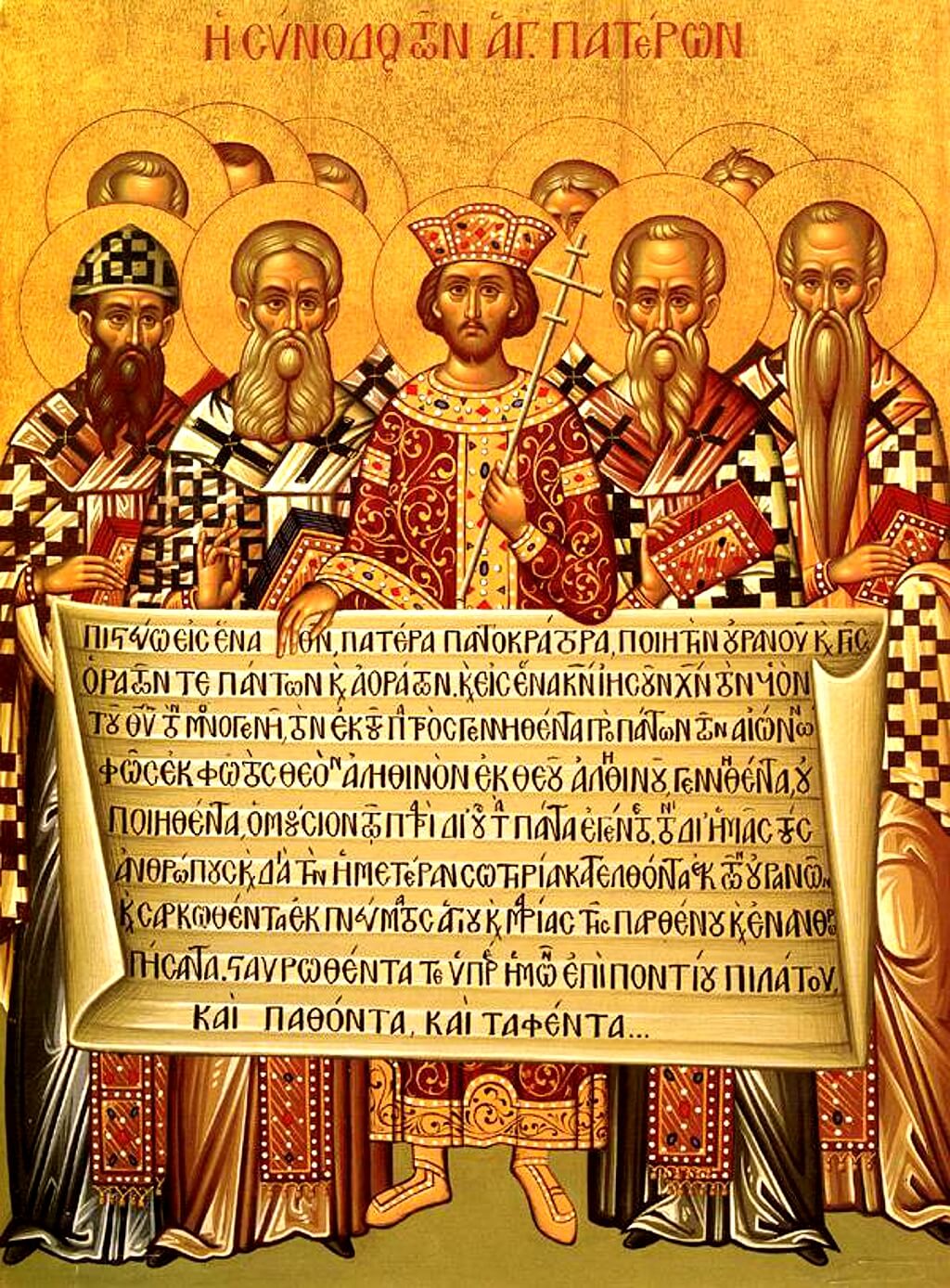
Creedal Christians: The Nicene Creed
Posted by Luke J. Wilson on 2nd June 2019 in Early church | nicene creed,nicea council,creeds,creedal christians,creedal
The Nicene Creed — what is it and why is it called that?
This creed gets its name from a time and place: the first ecumenical church council held at Nicaea, which is now known as İznik in northwestern Turkey, in 325 AD.
Now that may raise another question for you: what is an ecumenical council? Well, to explain more about the Nicene Creed, we are going to have to take a look at The First Council of Nicaea in order to better understand why this creed was written.
First things first though; an “ecumenical council” is ideally a church-wide meeting where all the Bishops from all across the church come together to hold a very large and very important meetin...
What is Monarchical Trinitarianism?
Posted by Luke J. Wilson on 21st July 2024 in Trinity | trinity,monarchy of the Father,Monarchical Trinitarianism,church fathers,church history
Monarchical Trinitarianism, also referred to as the “Monarchy of the Father,” is a theological perspective that asserts the Father as the sole source (or monarch) within the Trinity. This view maintains a clear distinction of roles among the Father, the Son, and the Holy Spirit while upholding their unity in essence. It is essential to distinguish this from Monarchianism, a heretical belief condemned in the 4th century, which posited that God is a single person rather than three distinct persons.
The Eternal Begottenness of the Son
The term “created” used by the early pre-Nicene Fathers does not align with the Arian view, which posits that the Son was...
How Old Was Jesus When He Died? A Fresh Look At The Historical Clues
Posted by Luke J. Wilson on 9th April 2025 in history | history,church fathers,church history,Jesus,crucifixion
We often hear that Jesus was “about 33 years old” when he was crucified and only had a three-year ministry. But have you ever wondered how precise that number is, or why we assume that was his age, especially when Scripture doesn’t specify?
Table of Contents
The Gospel of Luke: “About Thirty”
Early church Testimony: Irenaeus and the Longer Ministry
Historical Anchors: Birth, Pilate, and the Crucifixion Window
The Death of Herod
Cross-referencing with Pilate, Caiaphas, and Jesus
When Did Tiberius Begin to Reign?
1. From his co-regency with Augustus (AD 11–12)
2. From the death of Augustus (AD 14)
How Does This Affect Jesus’ Ag...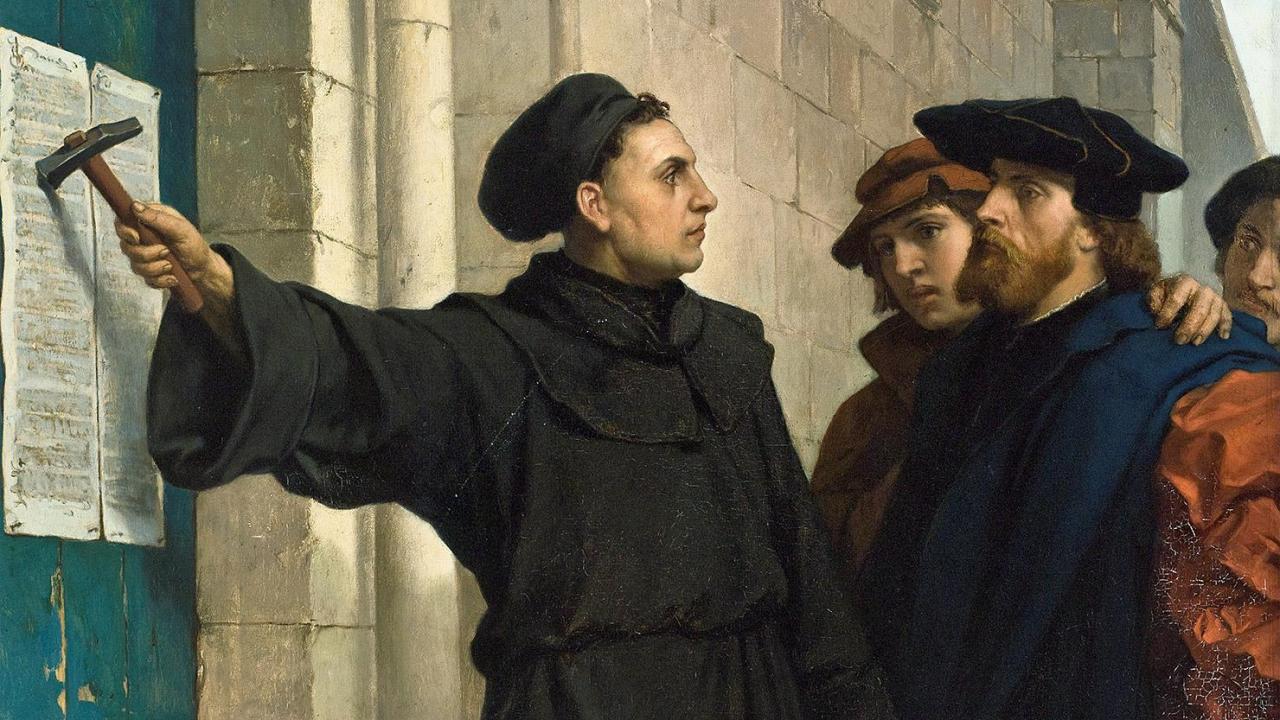
Nails, Theses, and Myth: The Truth About Luther's Famous Door
Posted by Luke J. Wilson on 5th June 2025 in Blogging | reformation,Luther,Protestantism,roman catholic
As we commemorated the 500th anniversary of the Protestant Reformation this year, the familiar image of Martin Luther striding up to the church door in Wittenberg — hammer in hand and fire in his eyes — has once again taken centre stage. It’s a compelling picture, etched into the imagination of many. But as is often the case with historical legends, closer scrutiny tells a far more nuanced and thought-provoking story.
The Myth of the Door: Was the Hammer Ever Raised?
Cambridge Reformation scholar Richard Rex is one among several historians who have challenged the romanticised narrative. “Strangely,” he observes, “there’s almost n...
Lent Day 34: Cyril of Jerusalem: Catechetical Lectures: Lecture XXIII
Posted by Luke J. Wilson on 8th April 2017 in Lent | Lent,great lent,fasting,early church fathers,devotional,daily reading,Doctor of the church,lectures,liturgy,catechism,Bishop of Jerusalem,Eucharist,Lord's Prayer
Day Thirty-four: St. Cyril of Jerusalem: Catechetical Lectures: Lecture XXIII
Who: Bishop of Jerusalem and Doctor of the church, born about 315; died probably 18 March, 386. Little is known of his life, except from his younger contemporaries, Epiphanius, Jerome, and Rufinus, as well as from the fifth-century historians, Socrates, Sozomen and Theodoret.
What: Each of the lectures deal with a different topic to teach converts the mysteries of the church, particularly: rites of the renunciation of Satan and his works, of anointing with oil, of baptism, of anointing with the holy chrism, and of partaking of the body and blood of Christ.
Why: Cyril delivered to ne...
Powered by WebBoss.io 3.7.1
Copyright © 2026 The Sacred Faith: Timeless Truths for Modern Minds. All Rights Reserved.
