
Blog Search Results


14 results for myth
found
within the Blog
6 displayed out of 14 (0.03seconds)Page 1 of 3

Debunking the myth: The Council of Nicaea and the Formation of the Biblical Canon
Posted by Luke J. Wilson on 20th November 2023 in Early Church | church history,council of nicaea,myths,debunked,canon,biblical canon
A myth that never seems to fade away: the idea that the Council of Nicaea, convened in 325 AD under the authority of Roman Emperor Constantine, played a pivotal role in establishing the Biblical canon. This notion suggests a conspiracy and power play orchestrated by a select group of elite bishops; a narrative popularised by works like Dan Brown’s Da Vinci Code. However, a closer examination reveals a lack of historical basis for this claim.
The Council of Nicaea and the Canon
Contrary to popular belief, there is no evidence that the Council of Nicaea discussed or established the Canon of Scripture, leading to the creation of the Bible. Early Christian cano...
Debunking the Crusades: 5 myths You Probably Believe
Posted by Luke J. Wilson on 14th October 2024 in Crusades | Crusades,Medieval,history,muslim
The Crusades have long been a topic distorted by myth, legend, and misconception, especially in modern pop culture and film. Movies and television often portray the Crusaders as either valiant knights on holy missions or brutal barbarians bent on conquest, feeding into a skewed image of the events. These simplistic portrayals fail to capture the complex motivations and historical realities of the Crusades.
The Guardian article about the Reconciliation Walk
One striking example of how these misunderstandings have influenced modern perceptions was the so-called Reconciliation Walk in 1999, marking the 900th anniversary of the First Crusade. Hundreds of Chris...
Biblical Inspiration and the Canon: How We Got the Bible
Posted by Luke J. Wilson on 28th February 2025 in Early Church | canon,nicea council,nicene council,myths,church history,church fathers
The Bible is often described as “God-breathed,” a phrase taken from 2 Timothy 3:16: “All scripture is inspired by God and is useful for teaching, for reproof, for correction, and for training in righteousness.” But what does it mean for Scripture to be “inspired,” and how did the books of the Bible come to be recognised as part of the canon — the authoritative collection of writings that make up the Bible? Were they really “decided” at the Council of Nicaea, as some popular myths claim?
Table of Contents
Understanding Biblical Inspiration
What is the Canon?
The Septuagint and the Deuterocanonical Books
How Were the Books of the Bi...When did Christians become so whiny?
Posted by Luke J. Wilson on 25th April 2014 in Christianity | persecution, news, Christians, whiny, Google, homosexuality, Early Church, Love, Church Fathers
The Church is so whiny at times. At least in the West it seems, from the various news outlets which like to showcase the "worst" (and actual worst) of the bunch. Sometimes I read articles and wonder why do certain Christians care so much about this!? It's usually a non-issue really, often under the guise of "principles" or "persecution."
Now I realise that some of the articles I linked to above could also relate to serious issues that we, as Christians, should face and discuss. But even from a quick search on Huffington Post and the BBC News for "Christian", the majority of articles (as of writing) from America relate to homosexuality in some form, and for...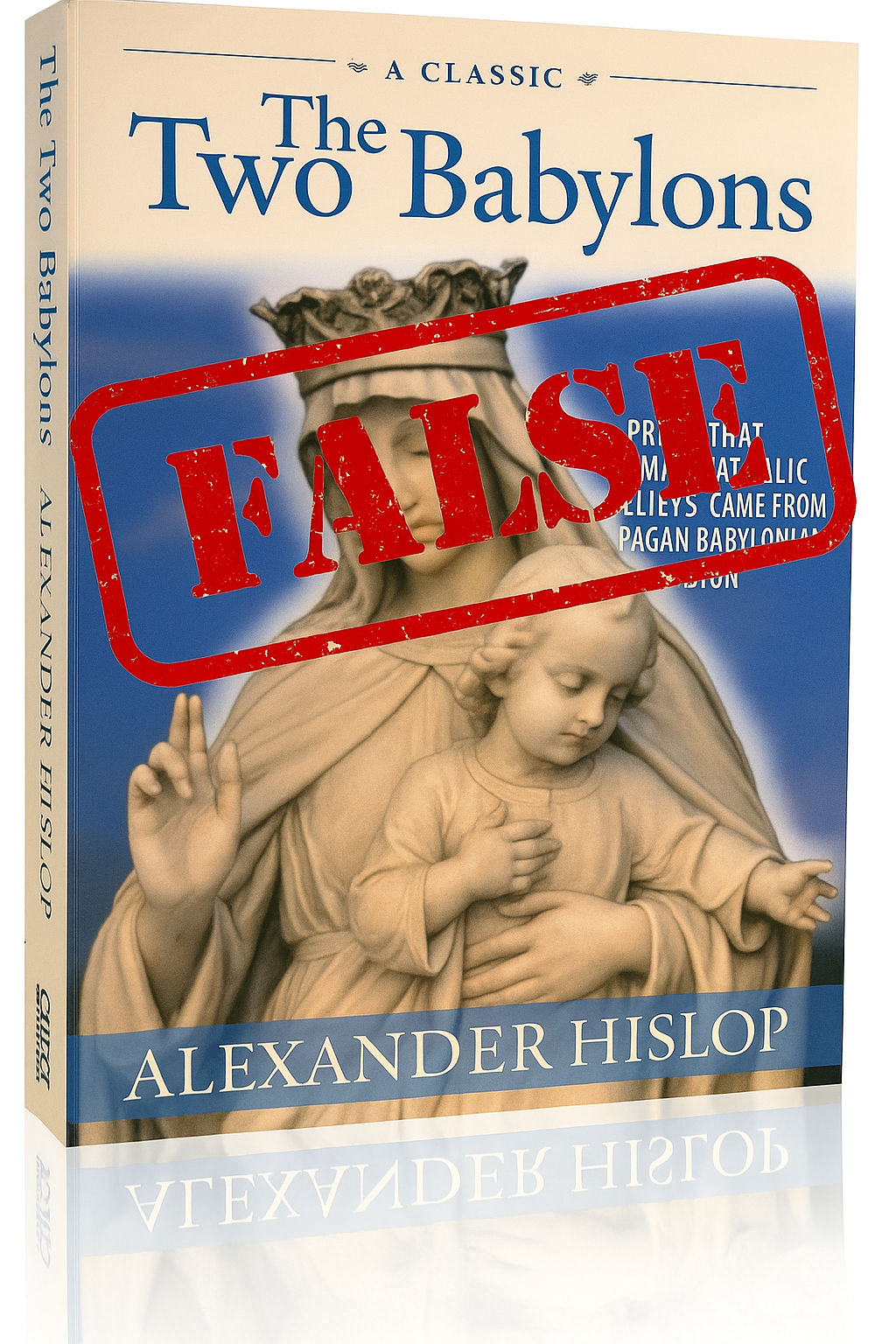
The Two Babylons Exposed: The Book That Misled Millions
Posted by Luke J. Wilson on 21st April 2025 in Easter |
...ugh pagan myth. The earliest depictions of Mary and the Christ-child date back to the second century and do not resemble any of the pagan idols. But, again, the common accusations are based on superficial similarities of a woman nursing a child. That’s going to look the same no matter who or what does that!
Oldest depiction of Mary. Dura-Europos Church, Syria, 2nd century
What About Lent and Tammuz?
One of Hislop’s more popular claims is that Lent comes from a Babylonian mourning ritual for the god Tammuz, mentioned in Ezekiel 8:14. He argues that early Christians borrowed the 40-day mourning period and just rebranded it.
But this doesn’t line up...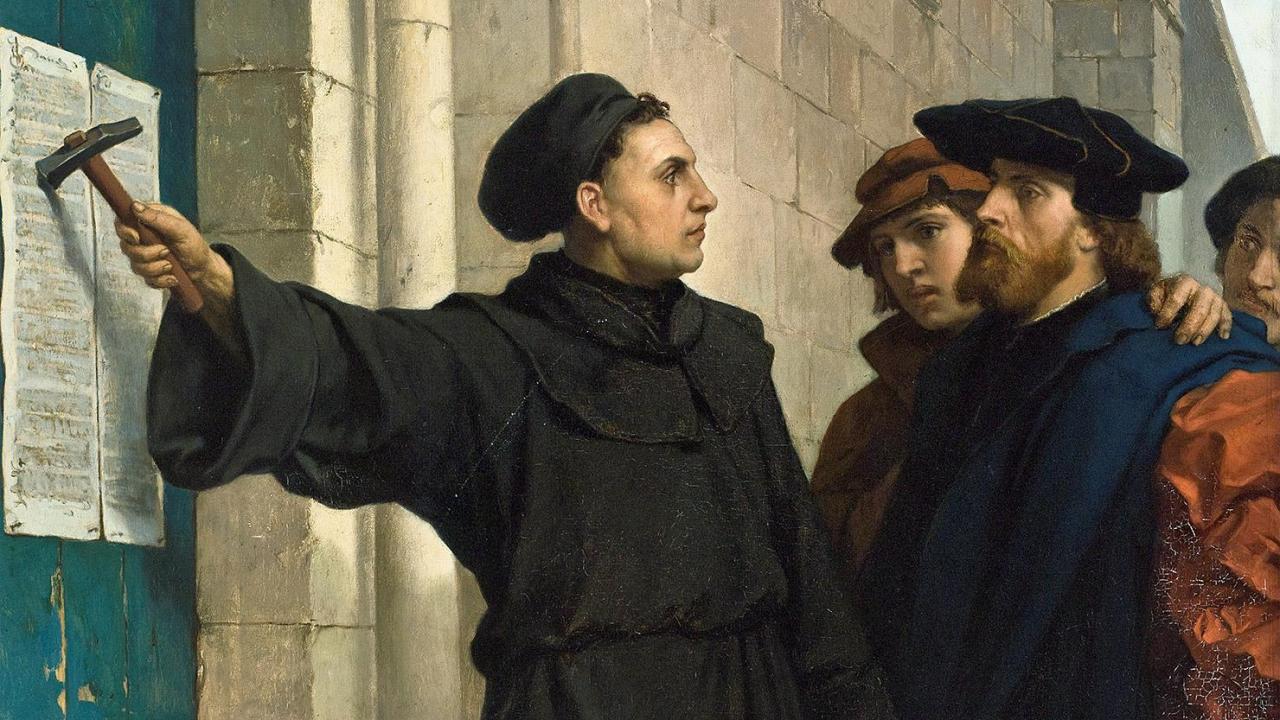
Nails, Theses, and myth: The Truth About Luther's Famous Door
Posted by Luke J. Wilson on 5th June 2025 in Blogging | reformation,Luther,Protestantism,roman catholic
...As we commemorated the 500th anniversary of the Protestant Reformation this year, the familiar image of Martin Luther striding up to the church door in Wittenberg — hammer in hand and fire in his eyes — has once again taken centre stage. It’s a compelling picture, etched into the imagination of many. But as is often the case with historical legends, closer scrutiny tells a far more nuanced and thought-provoking story.
The myth of the Door: Was the Hammer Ever Raised?
Cambridge Reformation scholar Richard Rex is one among several historians who have challenged the romanticised narrative. “Strangely,” he observes, “there’s almost n...
Powered by WebBoss.io 3.7.1
Copyright © 2026 The Sacred Faith: Timeless Truths for Modern Minds. All Rights Reserved.
