
Featured
William Lane Craig Rejects The Nicene Creed. Is He Right To?
25 August
Aug 25
25th August 2026
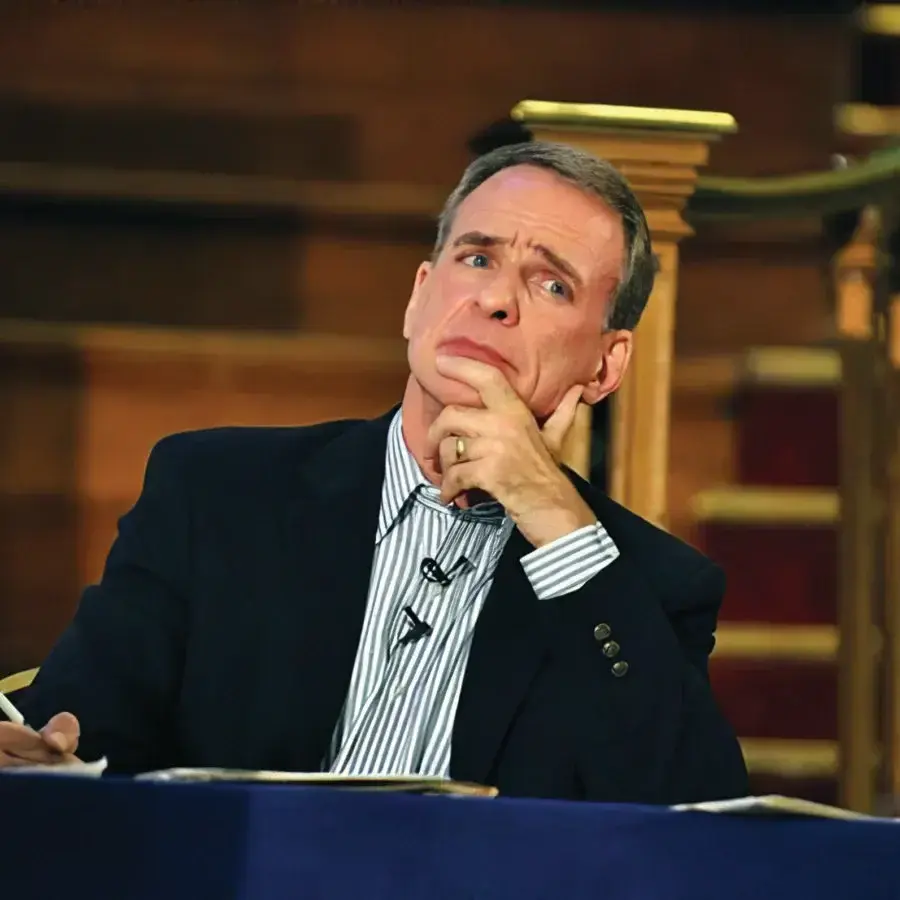
If you’ve been on Christian social media this week, you’ve probably seen it: William Lane Craig — one of the most respected Protestant apologists of our time— flatly denying a core line of the Nicene Creed. In his own words, he does not believe or confess that the Son is eternally begotten from the Father in his divine nature. Human nature, yes. But divine? Nope. For a lot of readers, that’s a jarring sentence. Isn’t “eternally begotten of the Father” literally in the Creed we recite? How can someone who has spent decades defending the resurrection and the existence of God turn around and reject something so central? I want to walk through what’s actually going on here, because it’s more interesting — and older — than a single viral clip suggests. What Craig is actually rejecting The doctrine in question is called eternal generation: the idea that the Son is eternally derived from the Father, “begotten, not made,” sharing the Father’s nature without there ever being a time he didn’t exist. It’s not saying the Son had a beginning; it’s saying the Son’s very being is eternally from the Father, the way light is eternally from the sun. Craig has argued for years, most fully in his paper Is God the Son Begotten in His Divine Nature? (2019), that this idea owes more to Greek philosophical categories borrowed by the second-century Apologists than to anything the biblical writers themselves teach. He calls it a vestige of “Logos Christology” and prefers a model where Father, Son, and Spirit are simply co-equal and co-eternal, without one eternally generating another. William Lane Craig disavows the Nicene Creed Why I think this gets the history backwards Here’s where I’d push back, and where I think this whole debate needs a bit more historical texture than a viral post can give it. Long before Nicaea formalised its language, the earliest post-apostolic Christians were already working with something like what’s called the Monarchy of the Father (or Monarchical Trinitarianism) — a framework that takes the Father’s monarchia (his unique, self-existent source of divinity, or autotheos) seriously as the fountainhead from which the Son is begotten and the Spirit proceeds. This is worth distinguishing carefully from Monarchianism, the second/third-century heresy that collapsed the persons of the Trinity into one another to protect God’s oneness — the Monarchy of the Father is the orthodox opposite of that, affirming three distinct, co-eternal persons while still honouring the Father as their singular source. On this reading, the Son and Spirit aren’t lesser, but they do find the very source of their divinity in the Father — not as effects of a philosophical system layered onto scripture, but as a way of taking John’s own language (the Word who was with God and was God, yet distinct from “the Father”) with full seriousness. That’s the thing I think gets lost when eternal generation gets dismissed as a “leftover.” Logos Christology isn’t an embarrassing accretion — it’s arguably what John 1 is doing from verse one. The Church didn’t import that idea to explain the text; the text seems to be why the Church needed the idea. None of this makes Craig any less serious a thinker, and it’s worth saying plainly: this isn’t the first time he’s stepped outside Nicene orthodoxy — he’s made similar moves on Christ’s two wills (dyothelitism) in the past. But it is, I think, a real departure, not just a “minor unorthodoxy.” Why it matters beyond the argument It would be easy to turn this into another “gotcha” moment — ‘look, even the great apologist gets it wrong!’ I don’t think that’s the right response. Craig has done more than most to defend the reasonableness of the Christian faith to a sceptical world, and disagreeing with him on this doesn’t erase that. But it is a good reminder that ev...
The Reformation: A Sound-Bite History (Book Review)

14 February
Feb 14
14th February 2019
This short little book on the Reformation and some of the leading men who helped to kick-start it and continue to fan its flames has been very enjoyable to read. It really is a “sound bite history” as the chapters are short and snappy, and really only cover the absolute basics of each of the Reformers lives. The book has seven chapters, with six of them dedicated to an individual who had a pivotal role in the beginnings of the Reformation: Martin Luther, John Wycliffe, John Huss, John Calvin...
Will the Real Heretics Please Stand Up (Book Review)

30 January
Jan 30
30th January 2019
Straight off, this book will challenge you in your thinking and quite possibly in your practice and outworking of life as a Christian—especially if you are from an evangelical/Baptist/non-denominational background. Will the Real HereticsPlease Stand Up The book starts of taking you carefully through some of the practices and beliefs of the early church and those who knew the Apostles personally. It all feels very hopeful and like you're being led onward in a journey towards a certain goa...
On the Feast of the Nativity, a sermon by Leo the Great
22 December
Dec 22
22nd December 2018
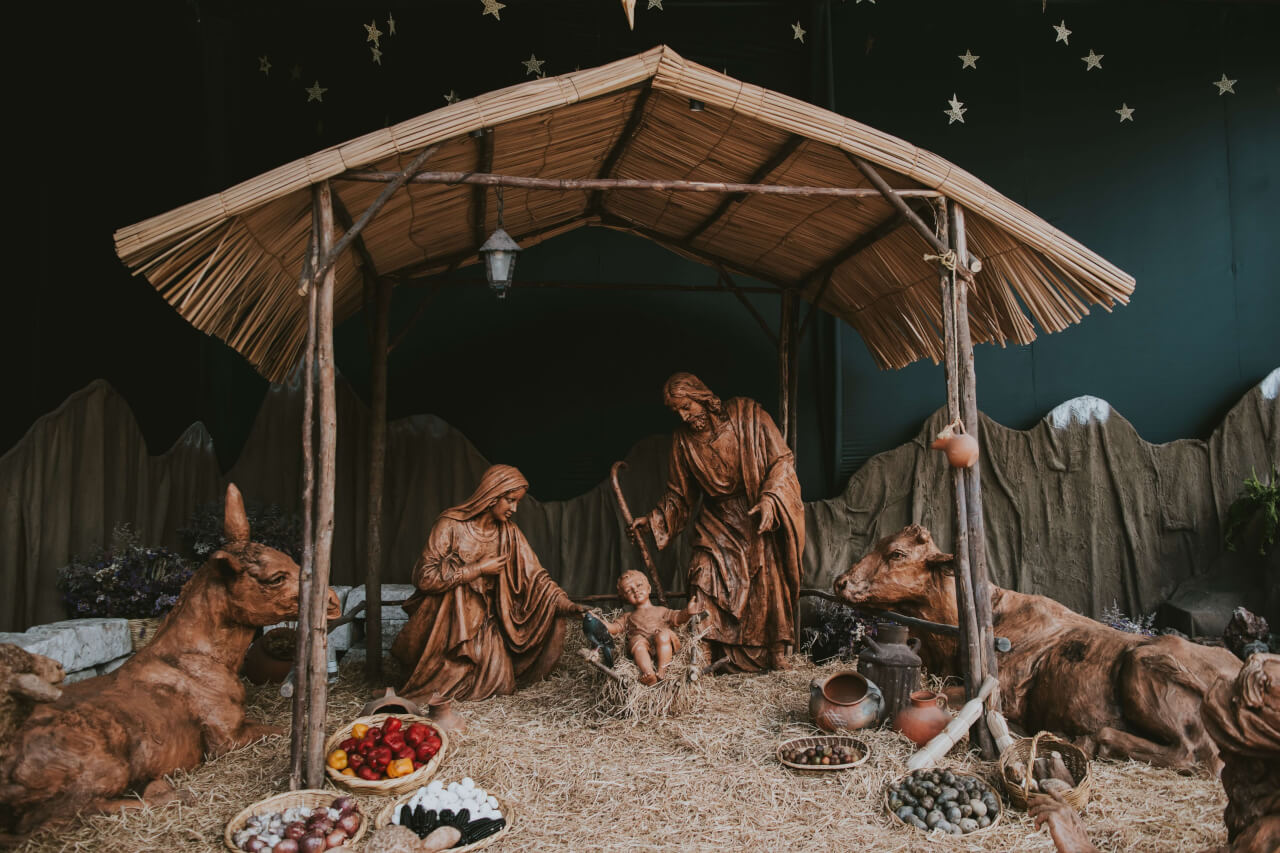
In the days leading up to Christmas, I wanted to share a sermon from a man known as Leo the Great (aka Pope Leo I), who was a Pope from 440-61 AD. He was one of the most significant and important men in Christian antiquity, as he tried to combat the heresies which seriously threatened church unity in the West, such as Pelagianism. This sermon of his about the incarnation of Christ and what it means for us has always stuck with me since I first read it last April when writing my own book on the E...
Who was the real Santa Claus?

17 December
Dec 17
17th December 2018
It's that magical time of year when the lights go up, the trees get decorated and a familiar bearded man in a red suit pops up everywhere. He goes by a few names: Santa Claus, Father Christmas, and Saint Nick. But who was the real Santa Claus? Well, to answer that, we need to go way back in history to the fourth century to a Bishop called Nicholas of Myra (present-day Demre, Turkey). Memes abound about St Nicholas and Arius Some early lists place him as one of the Bishops who attende...
John Chau, missionary to the Sentinelese: martyr or madness?

3 December
Dec 3
3rd December 2018
You've probably seen it in the news lately: John Chau, the American guy who tried to evangelise the secluded Sentinelese tribe off the coast of India. Much of the debate in secular media has centered around the grief of his friends and family; how he could have brought outside disease to the tribespeople and potentially killed them all (despite this not being their first contact with outsiders, with no known ill effect), or that he ventured there completely in ignorance with no preparation or wi...

Powered by WebBoss.io 3.7.1
Copyright © 2026 The Sacred Faith: Timeless Truths for Modern Minds. All Rights Reserved.
