
Featured
William Lane Craig Rejects The Nicene Creed. Is He Right To?

25 August
Aug 25
25th August 2026
If you’ve been on Christian social media this week, you’ve probably seen it: William Lane Craig — one of the most respected Protestant apologists of our time— flatly denying a core line of the Nicene Creed. In his own words, he does not believe or confess that the Son is eternally begotten from the Father in his divine nature. Human nature, yes. But divine? Nope. For a lot of readers, that’s a jarring sentence. Isn’t “eternally begotten of the Father” literally in the Creed we recite? How can someone who has spent decades defending the resurrection and the existence of God turn around and reject something so central? I want to walk through what’s actually going on here, because it’s more interesting — and older — than a single viral clip suggests. What Craig is actually rejecting The doctrine in question is called eternal generation: the idea that the Son is eternally derived from the Father, “begotten, not made,” sharing the Father’s nature without there ever being a time he didn’t exist. It’s not saying the Son had a beginning; it’s saying the Son’s very being is eternally from the Father, the way light is eternally from the sun. Craig has argued for years, most fully in his paper Is God the Son Begotten in His Divine Nature? (2019), that this idea owes more to Greek philosophical categories borrowed by the second-century Apologists than to anything the biblical writers themselves teach. He calls it a vestige of “Logos Christology” and prefers a model where Father, Son, and Spirit are simply co-equal and co-eternal, without one eternally generating another. William Lane Craig disavows the Nicene Creed Why I think this gets the history backwards Here’s where I’d push back, and where I think this whole debate needs a bit more historical texture than a viral post can give it. Long before Nicaea formalised its language, the earliest post-apostolic Christians were already working with something like what’s called the Monarchy of the Father (or Monarchical Trinitarianism) — a framework that takes the Father’s monarchia (his unique, self-existent source of divinity, or autotheos) seriously as the fountainhead from which the Son is begotten and the Spirit proceeds. This is worth distinguishing carefully from Monarchianism, the second/third-century heresy that collapsed the persons of the Trinity into one another to protect God’s oneness — the Monarchy of the Father is the orthodox opposite of that, affirming three distinct, co-eternal persons while still honouring the Father as their singular source. On this reading, the Son and Spirit aren’t lesser, but they do find the very source of their divinity in the Father — not as effects of a philosophical system layered onto scripture, but as a way of taking John’s own language (the Word who was with God and was God, yet distinct from “the Father”) with full seriousness. That’s the thing I think gets lost when eternal generation gets dismissed as a “leftover.” Logos Christology isn’t an embarrassing accretion — it’s arguably what John 1 is doing from verse one. The Church didn’t import that idea to explain the text; the text seems to be why the Church needed the idea. None of this makes Craig any less serious a thinker, and it’s worth saying plainly: this isn’t the first time he’s stepped outside Nicene orthodoxy — he’s made similar moves on Christ’s two wills (dyothelitism) in the past. But it is, I think, a real departure, not just a “minor unorthodoxy.” Why it matters beyond the argument It would be easy to turn this into another “gotcha” moment — ‘look, even the great apologist gets it wrong!’ I don’t think that’s the right response. Craig has done more than most to defend the reasonableness of the Christian faith to a sceptical world, and disagreeing with him on this doesn’t erase that. But it is a good reminder that ev...
The Temptations of Jesus: Testing God
4 March
Mar 4
4th March 2018
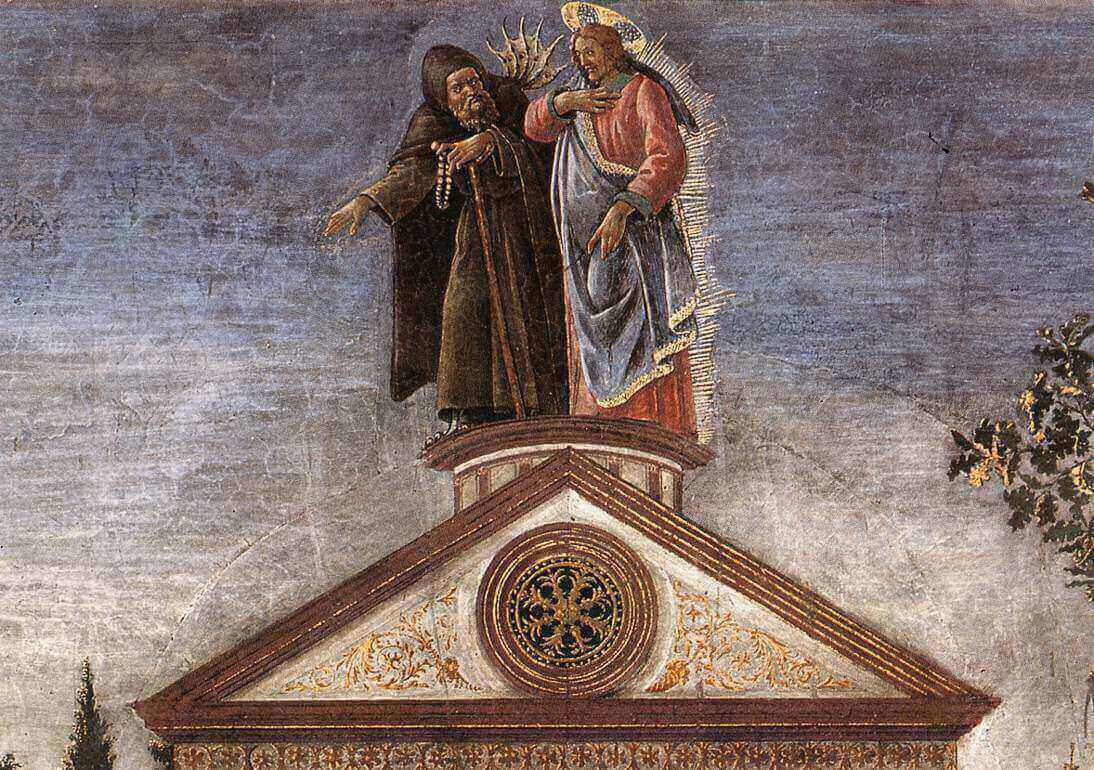
Here we are at the final temptation that the devil directly attacks Jesus with (I say directly, because next week I’m going to look at the more subtle attacks and temptations we can face). Let’s begin with the text: Matthew 4:5-7 Then the devil took him to the holy city and placed him on the pinnacle of the temple, saying to him, “If you are the Son of God, throw yourself down; for it is written, ‘He will command his angels concerning you,’ and ‘On their hands they will be...
The Temptations of Jesus: Worship and Glory
25 February
Feb 25
25th February 2018
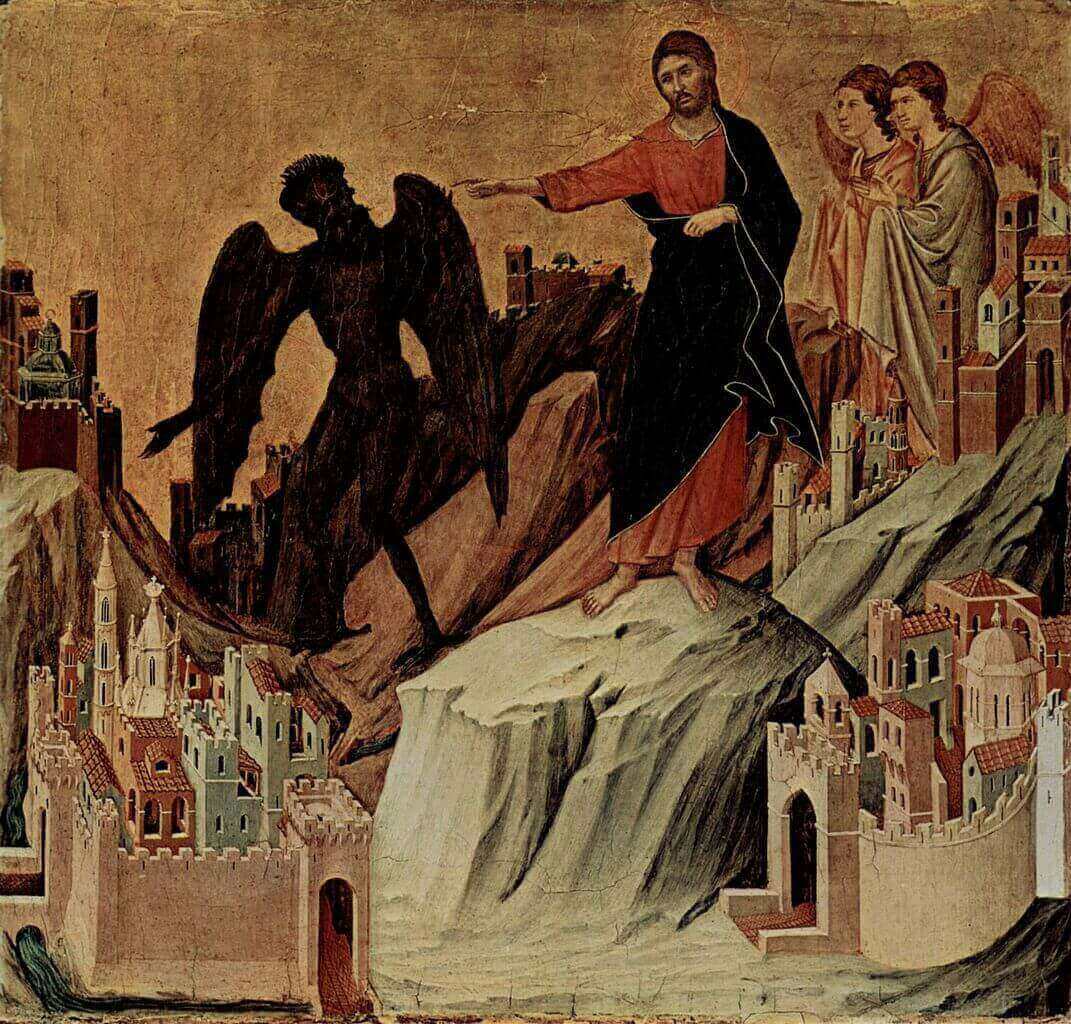
Here we are on the second Sunday of Lent, and this week I am looking at the next temptation Jesus faced in the desert against the devil, the one of worship and glory. Let's take a look at the text: Luke 4:5-8 Then the devil led him up and showed him in an instant all the kingdoms of the world. And the devil said to him, “To you I will give their glory and all this authority; for it has been given over to me, and I give it to anyone I please. If you, then, will worship me, it will all be y...
The Temptations of Jesus: Pride

18 February
Feb 18
18th February 2018
Welcome to the first part of a short series I'm writing during Lent. We’re on the first Sunday of Lent, and so I’m going to be looking at the forty days that Jesus spent in the wilderness, and the temptations he endured. A new post will be up every Sunday, and you can view the series overview here: Lent 2018. Mark 1:12-13And the Spirit immediately drove him out into the wilderness. He was in the wilderness forty days, tempted by Satan; and he was with the wild beasts; and the angels waited ...
Lent 2018: The Temptations of Jesus
13 February
Feb 13
13th February 2018
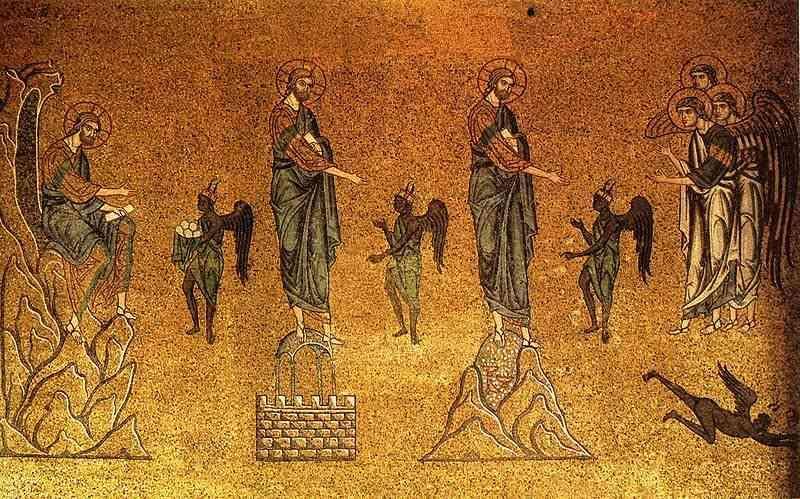
Lent is just around the corner, and so this year I've decided to write a short series over the next 40 days looking at the forty days that Jesus spent in the wilderness, and the temptations he faced. I'll post a new blog each Sunday of Lent looking at each temptation, and then finish the series just before Easter Sunday looking at “how was Jesus a sacrifice?”. Series outline: Temptation one: Pride (1st Sunday of Lent, February 18, 2018) Temptation two: Worship and Glory (2nd Sunday of ...
Former Muslim Explains the Trinity

9 February
Feb 9
9th February 2018
I saw this video doing the rounds on Facebook, and thought it was too good not to share here as well. Very few people tend to articulate the Trinitarian doctrine well enough to: a) still make sense, and b) not slip into heresy. Just reading the comments section on this video proves point b) quick enough, with many people giving their take on it (and usually espousing some form of Modalism). I won't make a big post on the Trinity now, but I may do one soon off the back of this one, as it's clea...

Powered by WebBoss.io 3.7.1
Copyright © 2026 The Sacred Faith: Timeless Truths for Modern Minds. All Rights Reserved.
