Now you may be wondering about the title, or thinking “who the heck is Sophia??” — well, bear with me, and all will be revealed. It’s not as sinister or weird as it may first appear.
I saw a post on my Instagram feed the other day that just got me a little riled up. I’ll admit it, I can be a little short-tempered at times, especially around the subject of Jesus and seeing him/the Christian faith misrepresented to such a degree that it could mislead others down the wrong path. I don’t normally write responses to things like this, but I felt this one deserved it, mainly just to add some clarity to a somewhat confusing topic, and so there’s a place I (or you, if you fancy sharing my posts!) can point people to if this type of ideology is going to spread.
Here’s the Instagram post in question, but it’s the caption below it that got to me. I’ll quote the caption below, too, in case the embedded post doesn't work (here’s a direct link too).
A lot of the comments under that post seemed to find it quite affirming in some ways, others were confused as they’d never heard this before (and rightly so) but were keen to look into it. There were also a lot of references to a single author, and book, called, She Who Is, by Elizabeth A. Johnson, where this idea seemed to have originated in some form. In fact, the majority of the comments were wanting to explore this idea in more depth. So, I think maybe there’s something to be said there for the lack of female representation in the Church if it garnered this type of response, but I also thought if people are this taken by the idea, I wanted to write something to offer some Biblical and historical views on this “Sophia”, as she isn’t a new concept at all. The caption under the Instagram post sounds nice, but it’s ever so slightly off-kilter that it misrepresents everything.
Let’s look at the claims line by line:
Jesus had two moms. Their names are Mary and Sophia.
Well, not much to say here yet, but… nope.
You’ve heard about Mary, but do you know about Sophia?
Well, yes, I do. Maybe you, dear reader, know as well. But I began to question whether the author of the caption did.
Sophia is the Greek word for God’s Wisdom.
OK, finally. Getting to some facts and less conjecture. Although I would clarify that “sophia” (σοφία) is simply the Greek word for “wisdom”, not specifically “God’s wisdom” (or a name), per se. It’s a minor point though, I’m just nit-picking now.
Sophia was there at the beginning of creation. She birthed the world into existence.
Right, so here’s where it gets a little “squiffy”. It’s true that Wisdom, or “Sophia”, was there at the very beginning before anything was created, and that she stood beside God during creation. We can see all of this in the book of Proverbs, and it’s all very interesting. I’m sure you’ll notice parallels with John 1. But was this Sophia a separate entity from who we normally think of as being there in the beginning? Who created everything — the Word or the Holy Spirit?
Proverbs 8:22–31 The Lord created me at the beginning of his work, the first of his acts of long ago. Ages ago I was set up, at the first, before the beginning of the earth. When there were no depths I was brought forth, when there were no springs abounding with water. Before the mountains had been shaped, before the hills, I was brought forth — when he had not yet made earth and fields, or the world’s first bits of soil. When he established the heavens, I was there, when he drew a circle on the face of the deep, when he made firm the skies above, when he established the fountains of the deep, when he assigned to the sea its limit, so that the waters might not transgress his command, when he marked out the foundations of the earth, then I was beside him, like a master worker; and I was daily his delight, rejoicing before him always, rejoicing in his inhabited world and delighting in the human race.
If you have the books in your canon, there are similar things spoken of Wisdom in Sirach 24:1–22 and in Wisdom 7:21–27. They say things like “I came forth from the mouth of the Most High” (like a Word, maybe? See Psalm 33:6!), and, “…wisdom, the fashioner of all things…”. Do you see the picture coming together yet? You can read the other two references on Biblegateway.com to get a better grasp of the texts.
Deuteronomy 32 says that God gave birth to the people. That was Sophia.
This is a reference to Deut 32:18, which says, “You were unmindful of the Rock that bore you; you forgot the God who gave you birth.”. Personally, it seems a bit of a stretch to say so confidently this was “Sophia” when there’s no reference to Wisdom at all in the passage. The surrounding context appears to be speaking more about God in general, or YHWH specifically. But with a proper understanding of who Sophia truly is, this could be an accurate statement, just not within the context of the rest of the Instagram post.
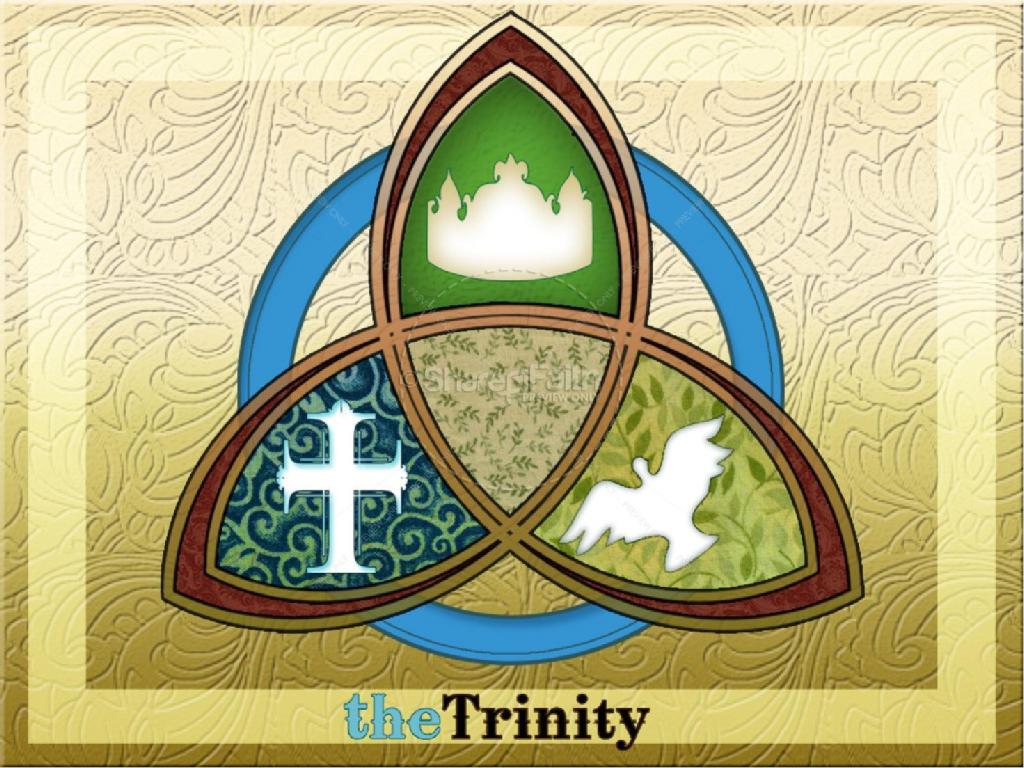
Christians began to associate Sophia with the Holy Spirit. The Spirit is Sophia. She is the divine feminine who is the Third Person of the Trinity.
Here the ‘Insta-theology’ comes to a head, and triumphantly announces Sophia’s true identity, the Holy Spirit! But is this accurate, though? Are Sophia and the Holy Spirit one and the same? Did Christians associate the two? Well… yes. Sort of. But only two in antiquity that I could find, and, interestingly, they both wrote around the same time period of AD 180: Theophilus and Irenaeus. Maybe more modern Christians relate Sophia with the Holy Spirit, but that would be a drastic break from the historical understanding, and would make for a complicated Christology when examining the “Wisdom” Scriptures closer.
Other than those two previously mentioned, the interpretation and understanding was pretty unanimous for the first few centuries: “Sophia” is Jesus.
I’ll give a few examples from the Early Church Fathers below, ranging in date between AD 150 to around 250-ish, so you can see how this conclusion was drawn, though you can read many more quotes from them here.
I shall give you another testimony, my friends,” said I, “from the Scriptures, that God begat before all creatures a Beginning, [who was] a certain rational power [proceeding] from Himself, who is called by the Holy Spirit, now the Glory of the Lord, now the Son, again Wisdom, again an Angel, then God, and then Lord and Logos … – Justin Martyr, Dialogue with Trypho, 61
But if, in your surpassing intelligence, it occurs to you to inquire what is meant by the Son, I will state briefly that He is the first product of the Father, not as having been brought into existence [i.e. not ex níhilo, out of nothing] for from the beginning, God, who is the eternal mind [νοῦς], had the Logos in Himself, being from eternity instinct with Logos [λογικός] … The prophetic Spirit also agrees with our statements. “The Lord,” it says, “made me, the beginning of His ways to His works.” [Prov 8:22] – Athenagoras, A Plea for the Christians, 10.3
For “the Lord who created the earth by His power,” as Jeremiah says, “has raised up the world by His wisdom;” [Jeremiah 10:12] for wisdom, which is His word, raises us up to the truth, who have fallen prostrate before idols, and is itself the first resurrection from our fall. – Clement of Alexandria, Exhortation to the Heathen, ch. 8
For He is termed Wisdom, according to the expression of Solomon … He is also styled First-born, as the apostle has declared: “ who is the first-born of every creature.” The first-born, however, is not by nature a different person from the Wisdom, but one and the same. – Origen, De Principiis, 1.2.1
And Solomon, David’s son and successor, presenting the same thought by a different name, instead of the ‘Word’ called Him Wisdom, making the following statement as in her person… – Eusebius of Caesarea, Preparation of the Gospel — Part 2
But if this same Wisdom is the Word of God, in the capacity of Wisdom, and (as being He) without whom nothing was made, just as also (nothing) was set in order without Wisdom, how can it be that anything, except the Father, should be older, and on this account indeed nobler, than the Son of God, the only-begotten and first-begotten Word? – Tertullian, Against Hermogenes, ch. 18
That Christ is the First-born, and that He is the Wisdom of God, by whom all things were made. – Cyprian, The Treatises of Cyprian
But we don’t even have to look that far in history to see this link, as Paul says it explicitly in 1 Corinthians 1:24: “…Christ the power of God and the wisdom of God.”.
This “Sophia”/Wisdom, as seen in the Old Testament Scriptures, was well established in Jewish thought by the time of Christ, so obviously the earliest followers of Jesus made the connection, which also followed through into the Early Church exegesis and teaching about Christ as the Wisdom of God, as we have just seen.
John’s Gospel is the one that most closely makes the link between the contemporary thought of Wisdom and the Word of God in the opening words of his Gospel:
John 1:1–3 In the beginning was the Word, and the Word was with God, and the Word was God. He was with God in the beginning. Through him all things were made; without him nothing was made that has been made.
Cast your mind back to Proverbs 8 and you’ll see the similarities and what John was subtly alluding to here. The subtext of these few sentences was saying a whole lot to the Jewish believers of his day. In Sophia and the Johannine Jesus, James Scott says, “The Logos of the Prologue, found to be influenced at almost every turn by Sophia speculation, proves to be a useful cover employed by the Fourth Evangelist to effect the switch of gender from Sophia to Jesus … John has intentionally presented us with Jesus as Jesus Sophia Incarnate.”.
I hope you can see now that this isn’t a novel idea, nor a modern feminist conception (though it has undoubtedly been picked up by feminists in more recent times). The idea that Jesus, the Word of God, is Sophia the Wisdom of God, is ancient. The connections are throughout the New Testament if we are looking carefully.
Jesus speaks of Wisdom in relation to the Son of Man in Matthew 11:19; Paul, again, combines the “wisdom of God” and Jesus together as one and the same in 1 Corinthians 1:30. 1 Corinthians is filled with veiled references, which take on new meaning when viewed through this new “Sophia” lens. Such as, contrasting faith and human wisdom with the “power of God”, which as we saw earlier in the same letter, is also Christ: “so that your faith might rest not on human wisdom but on the power of God.” (1 Cor 2:5). We know our faith rests in Jesus, and that Jesus is the Wisdom of God, so the subtle contrast here with “human wisdom” is quite clever by Paul.
Ephesians 1:17 and 3:10 also speak of the “spirit of wisdom” and the “wisdom of God” in relation to how we know God, and in terms of facing off against the “rulers and authorities in the heavenly places”, another thing we know from Scripture that Jesus did through the cross (Colossians 2:15). I won’t list everything out, but I would recommend having a search for yourselves.
Maybe now whenever you read of “wisdom” in the Bible, you’ll picture it differently if you have Jesus in mind from now on, and peel back another layer of the Scriptures, finding a deeper level than before. “The Bible is shallow enough for a child not to drown, yet deep enough for an elephant to swim.”, as Augustine apparently said.
There’s plenty more that could be said on this topic, but I’ll end here as this has become a lot longer than I anticipated! Let’s finish as we began, examining the final part of the claims from the pastor in the Instagram post:
Sophia is our divine Mother.
God is She who loves you.
For the final two lines of the caption, I’m going to quote from Matthew J. Ramage’s book, Dark Passages of the Bible: Engaging Scripture with Benedict XVI & Thomas Aquinas, as he deals with, and concludes, what I find to be the best way to respond to whether we should address God as “mother” or “she”, or anything primarily feminine:
In the Old Testament, see Dt 32:18 ( “the God who gave you birth”); Ps 22:10 (which appears to compare God to a midwife); Ps 131:2 (“like a child quieted at its mother’s breast”); Is 42:14 (where God cries out as a woman in labor); 46:3; 49:15 (“Can a mother forget her infant?”); 66:13 (“As a mother comforts her son . . .”); Nm 11:10–12; Hos 13:8 (“like a bear robbed of her cubs”); Gn 1:2 (where the Spirit hovers over creation as over a brood); Ps 17:8; 36:7; 57:1; 61:4; 91:1,4; Is 31:5 (shelter in the shadow of God’s wings); Jb 38:29 (which contains the image of a divine “womb”). For the New Testament, see Mt 23:37; Lk 13:34 (Jesus sighs, “How often would I have gathered your children together as a ‘hen’”); Acts 17:28 (states that “in him we live, move, have our being”); 1 Cor 3:1–3; 1 Pt 2:2 (calls us “babes in Christ” and speaks of “spiritual milk”); Jn 1:13 (speaks of Christians being “born of God”; 3:5 (“born of water and the Spirit”). Moreover, on three occasions in his first volume of Jesus of Nazareth, 139, 197, 207, Pope Benedict observes that the New Testament’s depiction of Jesus’s “compassion” (cf. Lk 7:13, for example) is intimately bound up with the feminine imagery, particularly the Hebrew notion of a mother’s womb (rahamim).
Benedict XVI, Jesus of Nazareth, 139–40. After treating the issue of whether or not the Old Testament presents us with a God who is not only our Father but also our “mother,” the pope concludes that “we cannot provide any absolutely compelling arguments” for not praying to God as mother; however, he observes that “while there are fine images of maternal love, ‘mother’ is not used as a form of address for God.” The sobriety of Benedict’s conclusion is a testimony to his great humility as an exegete and pastor: he teaches the fullness of Christian truth while willingly acknowledging the presence of myriad difficulties and challenges to it.
– Matthew J. Ramage, Dark Passages of the Bible: Engaging Scripture with Benedict XVI & Thomas Aquinas; (The Catholic University of America Press 2013), p. 30 [Footnotes 14 and 15]
I hope you found this enlightening and as insightful as I have in researching the topic! Leave your thoughts in the comments, and don’t forget to share the article if you enjoyed it.
Matthew J. Ramage, Dark Passages of the Bible: Engaging Scripture with Benedict XVI & Thomas Aquinas; (The Catholic University of America Press 2013), p. 30 [Footnotes 14 and 15]
Enjoying this content?
Support my work by becoming a patron on Patreon!
By joining, you help fund the time, research, and effort that goes into creating this content — and you’ll also get access to exclusive perks and updates.
Even a small amount per month makes a real difference. Thank you for your support!
Christian conversations about hell have never been especially calm, but the recent online reaction to Kirk Cameron’s comments in favour of annihilationism has been particularly revealing. Social media has erupted with accusations of heresy, doctrinal collapse, and theological compromise.
It’s the “Rob Bell Incident” all over again (if anyone remembers that).
The infamous John Piper tweet about Rob Bell
A lot of comments I saw were wondering what Ray Comfort thinks of this, as he and Kirk worked closely together in ministry for about 25 years, and while Ray wasn’t as dismissive as John Piper was of Rob Bell, he still calls out Kirk’s new views as “erroneous”:
While we believe Kirk is sincere, we believe that conditional mortality and annihilationism are erroneous views, and that the Bible’s clear teaching on hell is known as eternal conscious torment. We firmly believe that this is the only correct biblical view. (source)
Yet beneath the noise of social media grinding its gears is something far more ordinary and far more Christian: a believer wrestling seriously with Scripture, or as some would say, “being a Berean” (Acts 17:11). This is something we all should be doing, forming our views and doctrines from Scripture, not out-of-context social media video snippets and memes.
Whether one agrees with Cameron’s conclusions or not, what is happening is not the abandonment of orthodoxy, but the resurfacing of a long-standing and legitimate theological discussion. Annihilationism, or, more precisely, Conditional Immortality — is neither novel nor liberal, nor is it an attempt to make Christianity and hell more palatable, as many people presume. It is a position grounded in Scripture, represented throughout Church history, and held by Christians who take divine judgement every bit as seriously as their eternal-torment counterparts.
This is not a debate invented by Twitter (or “𝕏” as it’s called now…). It’s been around for a long, long, time.
Watch Kirk’s video in full here before forming an opinion
Immortality Is Assumed, Not Taught
One of the quiet assumptions behind Eternal Conscious Torment (ECT) is the idea that all human souls are inherently immortal, and therefore must exist forever somewhere. Once that premise is accepted, eternal suffering becomes unavoidable.
The difficulty is that Scripture does not teach innate human immortality. In fact, it repeatedly teaches the opposite.
Immortality is consistently presented as a gift, not a default state. Eternal life is something God grants, not something humans naturally possess (Rom. 6:23).
In Genesis, humanity is barred from the tree of life precisely so that they might not “live for ever” in a fallen state (Gen. 3:22–24). In the New Testament, immortality is something Christ “brings to light through the gospel” (2 Tim. 1:10), and something believers “put on” at the resurrection (1 Cor. 15:53–54).
Conditional Immortality simply takes that biblical theme seriously. It argues that only those united to Christ are granted immortality, while the wicked ultimately perish. Judgement is real, severe, and final — but it does not require endless conscious suffering.
This distinction matters, because much of the outrage directed at annihilationism is based on inherited philosophical assumptions, which come from Plato, rather than careful exegesis.
Biblical Language: Death Means Death
One of the most compelling aspects of conditionalism is the sheer consistency of biblical language concerning the fate of the wicked.
Scripture repeatedly speaks in terms of:
Death — “The soul that sins shall die” (Ezek. 18:4)
Perishing — “God so loved the world… that everyone who believes in him may not perish” (John 3:16)
Destruction — “They will suffer the punishment of eternal destruction” (2 Thess. 1:9)
Being consumed or brought to an end —â...
Have you ever wondered why God asks us to resist temptation and practise self-control? At first glance, it might seem like God is just trying to limit our enjoyment of life, especially when the world tells us to “follow your heart” and “give in to what feels good.” But what if I told you that resisting temptation is not about taking away your joy, but about protecting and blessing your life — spiritually, emotionally, and even mentally?
I was recently watching a TV series with my wife (called Perception, if you’re interested) about a neuroscience professor who consults for the FBI. The series often gives some interesting facts about the brain and human behaviour, and in one episode the main character capped off the episode by talking about how resisting temptations benefits your mental health.
This piqued my interest, as it made me think of the obvious Scriptural connections, so I looked it up to see if the episode was accurate.
And it was!
A 2017 neuroscience research study highlights how beneficial self-control and resisting temptation are for your brain and mental health. These findings echo the timeless truths of Scripture, showing us that God’s design for self-control is not just a moral obligation but a pathway to wholeness and flourishing as a healthy person.
The Science Behind Resisting Temptation
The study on self-control and temptation explored the brain’s salience network — the system responsible for detecting what’s important — and found something really very interesting: people better at resisting temptation have a healthier dynamic between this network and other parts of the brain, such as the visual system. In other words, their brains are better at ignoring distractions and focusing on what truly matters.
Here are some of the benefits of self-control revealed by the study:
Improved Focus — Resisting temptation strengthens your ability to stay on task and avoid distractions.
Emotional Resilience — Self-control helps regulate emotions, making you less reactive and more at peace.
Mental Clarity — It improves how your brain processes information, aiding decision-making.
Protection from Harm — It reduces the risk of mental health issues like depression, addiction, and impulsive behaviour which may help mitigate some symptoms of ADHD by strengthening attention regulation and executive function.
Spiritual Growth—Though not a part of the study, self-control aligns with God’s call for holy living and leads to greater spiritual maturity.
This isn’t just science talking; it’s evidence of God’s amazing design for your body and mind which has been testified to in the Scriptures for thousands of years, long before neuroscience could confirm it. I couldn’t help but be struck by this connection when I came across this study.
What Does the Bible Say?
The New Testament repeatedly highlights the importance of self-control and resisting temptation. These teachings are not arbitrary rules to suck the “fun” out of life, but divine guidance to help you thrive. Let’s explore how the Bible speaks to this:
Self-Control is a Gift from GodThe Bible teaches that self-control is a fruit of the Spirit (Galatians 5:22–23) and that God has given us a spirit of “power and of love and of self-discipline” (2 Timothy 1:7). The ability to resist temptation is not something we muster up alone; it’s a gift God gives to help us grow in Him and rely on His strength.
Resisting Temptation Brings FreedomJames 1:14–15 warns us that temptation, if left unchecked, leads to sin and ultimately to death. Science backs this up, showing that unchecked impulsivity can lead to destructive behaviours like addiction and emotional instability. God’s commands to resist temptation protect us from harm and lead us to freedom in Christ (John 8:36).
Your Mind MattersRomans 12:2 urges us to “be transformed by the renewing of your minds.” Resisting temptat...
Monarchical Trinitarianism, also referred to as the “Monarchy of the Father,” is a theological perspective that asserts the Father as the sole source (or monarch) within the Trinity. This view maintains a clear distinction of roles among the Father, the Son, and the Holy Spirit while upholding their unity in essence. It is essential to distinguish this from Monarchianism, a heretical belief condemned in the 4th century, which posited that God is a single person rather than three distinct persons.
The Eternal Begottenness of the Son
The term “created” used by the early pre-Nicene Fathers does not align with the Arian view, which posits that the Son was created ex nihilo (out of nothing), making Him a creature. As Arius infamously declared, “there was a time when the Son was not”. Rather, the Fathers articulated that the Son was begotten out of the Father, emphasising His divine origin and eternal existence within the Father’s bosom (cf. John 1:18 in Greek). As Justin Martyr explains, “For Christ is the first-begotten of God, and we have declared above that He is the Word of whom every race of men were partakers; and those who lived reasonably are Christians, even though they have been thought atheists” (Justin Martyr, First Apology, Chapter 46). This highlights that the Son, the Word, existed eternally with the Father before being begotten and manifested.
Similarly, Hippolytus expounds on this concept, noting that “God, subsisting alone, and having nothing contemporaneous with Himself, determined to create the world … For He was neither without reason, nor wisdom, nor power, nor counsel And all things were in Him, and He was the All. When He willed, and as He willed, He manifested His word in the times determined by Him, and by Him He made all things. … And thus there appeared another beside Himself. But when I say another, I do not mean that there are two Gods, but that it is only as light of light, or as water from a fountain, or as a ray from the sun. For there is but one power, which is from the All; and the Father is the All, from whom cometh this Power, the Word. And this is the mind which came forth into the world, and was manifested as the Son of God.” (Hippolytus, Against the Heresy of One Noetus, Chapter 10–11). Here, Hippolytus underscores the eternal existence of the Word within God, proceeding from the Father and being of the same essence.
The Procession of the Holy Spirit
The procession of the Holy Spirit from the Father is another essential aspect of Monarchical Trinitarianism. The Spirit, like the Son, derives His essence from the Father, ensuring that He is co-equal and consubstantial with the Father and the Son. Tertullian speaks to this procession in his work, Against Praxeas, explaining how the Word and Spirit derive their essence from the Father.
But still the tree is not severed from the root, nor the river from the fountain, nor the ray from the sun; nor, indeed, is the Word separated from God. … Now the Spirit indeed is third from God and the Son; just as the fruit of the tree is third from the root, or as the stream out of the river is third from the fountain, or as the apex of the ray is third from the sun. Nothing, however, is alien from that original source whence it derives its own properties. In like manner the Trinity, flowing down from the Father through intertwined and connected steps, does not at all disturb the Monarchy, while it at the same time guards the state of the Economy. (Tertullian, Against Praxeas, Chapter 8).
Looking at how Tertullian describes this doctrine, we can see how he has gone to lengths to carefully explain how the relationship within the Trinity exists together and relate to one another, while keeping intact the source and essence of divinity united and uncompromised. When we talk about these things, we use terms like “ontological” and “economy” to help to describe the Godhead. Ontology is the study of being, and what make...
The Trinity is a cornerstone of Christian faith, defining God as one Being in three Persons: Father, Son, and Holy Spirit. However, throughout history, various misunderstandings and false teachings — known as heresies — have arisen, challenging this core doctrine. Understanding these heresies can strengthen our faith and deepen our appreciation for the truths held by the Church since its earliest days.
What Is the Trinity?
Before diving into the heresies, let’s briefly review what we mean by the Trinity. The Christian doctrine of the Trinity teaches that God is one essence in three distinct Persons:
The Father: The Creator and sustainer of all.
The Son (Jesus Christ): God incarnate, who lived, died, and was resurrected for our salvation.
The Holy Spirit: The presence of God active in the world and within believers.
This concept is rooted in Scripture and has been affirmed by the Church through various councils and creeds.
Common Historical Heresies
Arianism
What It Taught: Arius, a priest in the early 4th century, claimed that Jesus Christ was not of the same substance as the Father. He taught that the Son was a created being, distinct and subordinate to the Father.
Church’s Response: The Council of Nicaea in 325 AD condemned Arianism, affirming that the Son is “of the same substance” (homoousios) as the Father. This is reflected in the Nicene Creed: “We believe in one Lord Jesus Christ, the only Son of God… of one Being with the Father.”
Patristic Quote: Athanasius, a staunch defender against Arianism, wrote, “For the Son of God became man so that we might become God” (On the Incarnation, 8:54).
Modalism (Sabellianism)
What It Taught: Sabellius proposed that God is one Person who reveals Himself in three different modes or aspects: as the Father in creation, as the Son in redemption, and as the Holy Spirit in sanctification. This denies the distinctiveness of the three Persons.
Church’s Response: Modalism was rejected because it undermines the relational aspect of the Trinity. The distinct Persons interact with each other, as seen in Jesus’ baptism where the Father speaks, the Son is baptised, and the Spirit descends like a dove.
Patristic Quote: Tertullian argued against Modalism by affirming the distinctiveness within the Godhead: “We do indeed believe that there is only one God, but we believe that under this dispensation… there is the Son, who has issued from the Father, and the Spirit, who has issued from both Father and Son” (Against Praxeas, 2).
Nestorianism
What It Taught: Nestorius, a 5th-century bishop, suggested that Jesus Christ was two separate persons — one human and one divine — rather than one Person with two natures.
Church’s Response: The Council of Ephesus in 431 AD declared that Jesus is one Person with two distinct yet united natures: divine and human. This ensures that Jesus is fully God and fully man, capable of bridging the gap between humanity and divinity.
Patristic Quote: Cyril of Alexandria emphasised the unity of Christ: “Wherefore we confess one Christ, one Son, one Lord. According to this understanding of this unmixed union, we confess the holy Virgin to be Mother of God; because God the Word was incarnate and became Man, and from this conception he united the temple taken from her with himself.” (Cyril of Alexandria Letter to John of Antioch).
Docetism
What It Taught: Docetists believed that Jesus’ physical body was an illusion and that He only seemed to suffer and die on the cross.
Church’s Response: The Church affirmed that Jesus’ incarnation and suffering were real, as this is essential for our salvation. Jesus’ true humanity allows Him to truly represent us and atone for our sins.
Patristic Quote: Ignatius of Antioch stressed the reality of Jesus’ incarnation and suffering: “He was truly of the seed of David according to the flesh, and the Son of God according to the will and powe...
If you’ve been on Christian social media this week, you’ve probably seen it: William Lane Craig — one of the most respected Protestant apologists of our time— flatly denying a core line of the Nicene Creed. In his own words, he does not believe or confess that the Son is eternally begotten from the Father in his divine nature. Human nature, yes. But divine? Nope.
For a lot of readers, that’s a jarring sentence. Isn’t “eternally begotten of the Father” literally in the Creed we recite? How can someone who has spent decades defending the resurrection and the existence of God turn around and reject something so central?
I want to walk through what’s actually going on here, because it’s more interesting — and older — than a single viral clip suggests.
What Craig is actually rejecting
The doctrine in question is called eternal generation: the idea that the Son is eternally derived from the Father, “begotten, not made,” sharing the Father’s nature without there ever being a time he didn’t exist. It’s not saying the Son had a beginning; it’s saying the Son’s very being is eternally from the Father, the way light is eternally from the sun.
Craig has argued for years, most fully in his paper Is God the Son Begotten in His Divine Nature? (2019), that this idea owes more to Greek philosophical categories borrowed by the second-century Apologists than to anything the biblical writers themselves teach. He calls it a vestige of “Logos Christology” and prefers a model where Father, Son, and Spirit are simply co-equal and co-eternal, without one eternally generating another.
William Lane Craig disavows the Nicene Creed
Why I think this gets the history backwards
Here’s where I’d push back, and where I think this whole debate needs a bit more historical texture than a viral post can give it.
Long before Nicaea formalised its language, the earliest post-apostolic Christians were already working with something like what’s called the Monarchy of the Father (or Monarchical Trinitarianism) — a framework that takes the Father’s monarchia (his unique, self-existent source of divinity, or autotheos) seriously as the fountainhead from which the Son is begotten and the Spirit proceeds. This is worth distinguishing carefully from Monarchianism, the second/third-century heresy that collapsed the persons of the Trinity into one another to protect God’s oneness — the Monarchy of the Father is the orthodox opposite of that, affirming three distinct, co-eternal persons while still honouring the Father as their singular source. On this reading, the Son and Spirit aren’t lesser, but they do find the very source of their divinity in the Father — not as effects of a philosophical system layered onto scripture, but as a way of taking John’s own language (the Word who was with God and was God, yet distinct from “the Father”) with full seriousness.
That’s the thing I think gets lost when eternal generation gets dismissed as a “leftover.” Logos Christology isn’t an embarrassing accretion — it’s arguably what John 1 is doing from verse one. The Church didn’t import that idea to explain the text; the text seems to be why the Church needed the idea.
None of this makes Craig any less serious a thinker, and it’s worth saying plainly: this isn’t the first time he’s stepped outside Nicene orthodoxy — he’s made similar moves on Christ’s two wills (dyothelitism) in the past. But it is, I think, a real departure, not just a “minor unorthodoxy.”
Why it matters beyond the argument
It would be easy to turn this into another “gotcha” moment — ‘look, even the great apologist gets it wrong!’ I don’t think that’s the right response. Craig has done more than most to defend the reasonableness of the Christian faith to a sceptical world, and disagreeing with him on this doesn’t erase that.
But it is a good reminder that ev...
Guest Post By Fiach OBroin-Molloy
My own roots lie in the Catholic tradition, but my workbench has brought me into contact with Christians whose devotional lives differ from mine. I make Catholic rosaries, Anglican prayer beads and other forms of devotional beads by hand. That work has not taught me that distinctions between traditions do not matter. It has taught me that, beneath those distinctions, many of us know the same difficulty: we want to pray, but our attention is restless.
I have travelled, lived and worked in a number of countries, from parts of Africa to countries further east. Again and again, I encountered beads or knotted cords held, counted or carried in prayer. The words, beliefs and purposes were not the same, and I would not flatten them into one vague spirituality. What stayed with me was the recurring human instinct to give devotion rhythm and weight—to let the body help the mind and heart remain present.
For a Christian, however, that instinct is gathered into a particular faith—the faith confessed in the creeds. Our prayer is addressed to the God made known as Father, Son and Holy Spirit. It is shaped by Scripture and centred on Jesus Christ, the Word made flesh, crucified and risen. Prayer beads do not broaden that confession into something less definite. At their best, they help us stay with it.
A faith that takes flesh seriously
Christian prayer is never only an activity of the mind. We speak and sing. We stand, kneel and bow. We fold our hands, make the sign of the cross, and receive bread and wine. The Christian faith does not ask us to escape being embodied creatures. At its centre is the astonishing declaration that the Word became flesh and dwelt among us (John 1:14).
Material things are not God, but they can serve our attention to God. That is the modest place in which I understand prayer beads. They do not create faith, improve the words of Scripture or make prayer more sincere. They simply give the hands something quiet to do while the heart and mind try to remain present.
As a maker, I think about weight, texture, spacing and movement. A bead should pass naturally beneath the thumb. The cord or chain should be strong enough to be returned to repeatedly. A good set of prayer beads should not continually demand admiration for itself. Its purpose is to become quiet in the hand.
Over time, beads polish, wood darkens and metal takes on the small marks of use. I rarely know the prayers that have been said with something I have made, but sometimes its wear tells me that it has been held often. That is a different kind of beauty from newness: not decoration, but evidence of return.
What the hands bring to Scripture
Lectio Divina invites us to read Scripture slowly and receptively. Luke J. Wilson has written much more fully about its four movements—reading, meditation, prayer and contemplation—and I would not try to redefine that teaching here. What interests me as a maker is the point at which a reader’s hand might support that attention.
Most of us have become highly practised at moving quickly through words. We skim messages, headlines and pages, often looking for the next piece of information before we have received the one in front of us. Sacred reading asks something different. It asks us to stay. A bead introduces a small resistance to speed. It marks a pause and gives us somewhere to return when the mind has already hurried ahead.
The Anglican prayer beads I make contain a cross, an invitatory bead, four cruciform beads and four groups of seven, often called weeks. I know that structure first through the work of my hands, not because I would presume to tell Anglicans how they ought to pray. What strikes me about it is its spaciousness: there are landmarks, passages and repeated opportunities to return to the cross.
One possible practice would be to choose a short passage from the Gospels. At the cross, the reader might remember that Christ is the centre of the reading. ...
��Pilate asked him, ‘What is truth?’ (John 18:38)
What is “truth”? A question famously asked by Pilate to Jesus during his trial. Ironically, Pilate was speaking to the embodiment of Truth itself.
John 14:6Jesus said to him, ‘I am the way, and the truth, and the life.’
Here’s a little ‘riddle’ to think about while you read this; see if you agree or not: “all truth is fact, but not all facts are truth”. I’ll explain it at the end if you’re confused.
Jesus is the ultimate Truth, but in a world and society that is becoming increasingly more relative, how do we test the truth and know what’s real or not? Especially with the sudden rise of AI video and photos getting more and more realistic, that old adage “the camera never lies” is completely false now.
This makes sifting and filtering facts from fiction on social media all the more difficult. Memes and images are shared stating claims bluntly and authoritatively as truth, which people just assume are accurate and then share it hundreds of thousands of times. Truth has been replaced by opinion masquerading as truth. “Your truth”, “my truth”, “their truth”.
But we can’t just blindly accept everything we see and are told. We must use our brains, check the sources and use our reasoning. God gave us intellect and reasoning to be used. In Isaiah 1:18, God invites us to come and reason together with him. We don’t follow a blind faith, we’re never asked to believe “just because”. The Old Testament is full of times when the historical examples of God’s actions are used as an anchor and reason for faith, and the same is true in the New Testament where we have the Gospels as eyewitness accounts, rooted in history. Paul writes to say that 500 people saw the risen Christ and that many are still alive so you can go and verify it for yourself and that he is passing on what he received from trusted people. The resurrection itself is grounded in it being a real event that if shown otherwise would make our faith “futile” and that we would be people to be most pitied.
1 Corinthians 15:17“If Christ has not been raised, your faith is futile and you are still in your sins.”
So with this in mind about our faith being grounded, all the more we should aim to do the same in other aspects of our lives. “Do your own research” is a common mantra online, but that in itself isn’t just Googling something and taking the first result that pops up. Especially now as most search engines give an AI overview first, which is just a compilation of the top results, not anything verified or fact-checked. And top results don’t always mean best results, or even accurate results. It typically just means the best keyworded and SEO-optimised result, which could be anything.
To properly research, you must know which are trusted sources, reputable websites as well as looking up people who are experts and authorities in their fields. Now this doesn’t always mean they are right but at least you’ll be better informed to make up your own mind and make decisions based on well-researched information, rather than the first blog you find online, or the most viewed YouTube video with someone yelling “facts” at you. Doing your own research means doing the leg-work in tracing down sources and footnotes and citations to see who said what and where it originated to ensure its faithful and trustworthy, and used in context.
The answer and example of the riddle
The “Black Swan Problem”
Strictly speaking, it highlights the difference between observed facts and absolute truth:
The “Fact” (at the time): For thousands of years, every recorded, verified observation of a swan in Europe was white. As far as European zoologists were concerned, “all swans are white” was a well-documented, empirically backed fact.
The Truth: Millions of black swans were happily swimming around in Western Australia. The truth was always that black swan...
In early July 2026, Egypt’s Ministry of Tourism and Antiquities announced something pretty amazing: an entire Byzantine-era city, buried beneath the sands of the Dakhla Oasis, had been uncovered almost intact! Streets, homes, bread ovens, a fortress, and at its heart, a fourth-century basilica church.
That might not seem very exciting on first glance. But this find deserves a closer look, because it puts flesh on something we usually only encounter in the abstract: what it actually looked like when Christianity took root, house by house, in an ordinary town far from the centres of imperial power.
What Was Found
The excavation, carried out by an Egyptian mission under the Supreme Council of Antiquities at the Ain El-Sabil site in the New Valley Governorate, roughly 185 miles west of Luxor, has been underway for several seasons. According to Hisham El Leithy, secretary-general of the Supreme Council of Antiquities, the settlement was laid out on a deliberate grid — north-south thoroughfares crossed by east-west streets, forming open squares and public spaces. This wasn’t a huddle of huts; it was a planned town.
At the centre of that plan stood a basilica church dating to the mid-fourth century AD, overlooking one of the main streets. Around it, archaeologists found the remains of two watchtowers, a heavily fortified structure with thick defensive walls, and houses with spacious reception halls and vaulted roofs — complete with bread ovens, kitchens, and grinding stones for processing grain. Everyday life, preserved almost exactly as it was left.
Two houses stand out that have been identified. One belonged to a man named Tisous,* identified as a church deacon, dating to the second half of the fourth century. The other belonged to a man named Tabibos. Over a thousand years later and we know the name of who owned a house and a home-church; I always find it fascinating! Archaeologists believe Tabibos’s house, which dates to the early fourth century, functioned as a house church before the basilica was ever built.
A collection of coins bearing Byzantine emperors, Christian symbols and Latin inscriptions was uncovered during the excavation. (Egyptian Ministry of Tourism and Antiquities via Facebook; Dea Picture Library/De Agostini via Getty Images)
There’s also a documentary find that’s easy to skim past but genuinely significant: nearly 200 ostraca — broken pieces of pottery and limestone used as everyday writing material — inscribed in Coptic and Greek. Diaa Zahran, head of the Islamic, Coptic and Jewish Antiquities Sector, described them as recording sales transactions, correspondence, and other mundane details of daily life. Things we rarely get a glimpse into as the mundane rarely makes history. Alongside these, the mission recovered a substantial haul of bronze coins bearing Byzantine emperors and Christian symbols, plus gold coins from the reign of Constantius II (337–361 AD) — coinage that anchors the site’s prosperity firmly within the fourth century.
Before the Basilica: The House Church at Ain El-Sabil
What makes Tabibos’s house the most theologically interesting part of this discovery is timing. If it predates the basilica and dates to the early fourth century, it sits right at — or just before — the pivot point of Roman-Egyptian Christian history: the years surrounding Constantine’s Edict of Milan in 313 AD, when Christianity moved from a persecuted minority faith to a tolerated, and increasingly favoured, one. A time of transition between a house church and a purpose-built basilica when the threat of persecution no longer loomed over the Church.
We know from Paul’s letters that the earliest churches met in homes — Romans 16:5 greets “the church in [Prisca and Aquila’s] house,” and similar greetings appear in 1 Corinthians 16:19 and Colossians 4:15.
If we were to imagine how a letter from Paul to this house church might...
My new book is out now! Myth, History, and the Council That Shaped Christianity
For over 1,700 years, the Council of Nicaea (AD 325) has been burdened with claims that refuse to die. That Emperor Constantine invented the Trinity. That the divinity of Jesus was decided by political vote. That the Bible was assembled to suit imperial power. That Christianity reshaped itself by absorbing pagan ideas.
This book subjects those claims to serious historical scrutiny.