
Blog Category: Philosophy (1 posts)
"Thinking Occurs" Is Not The Same As "I Think": On AI And The Question Of Personhood
Luke J. Wilson | 08th March 2026 |
General Articles
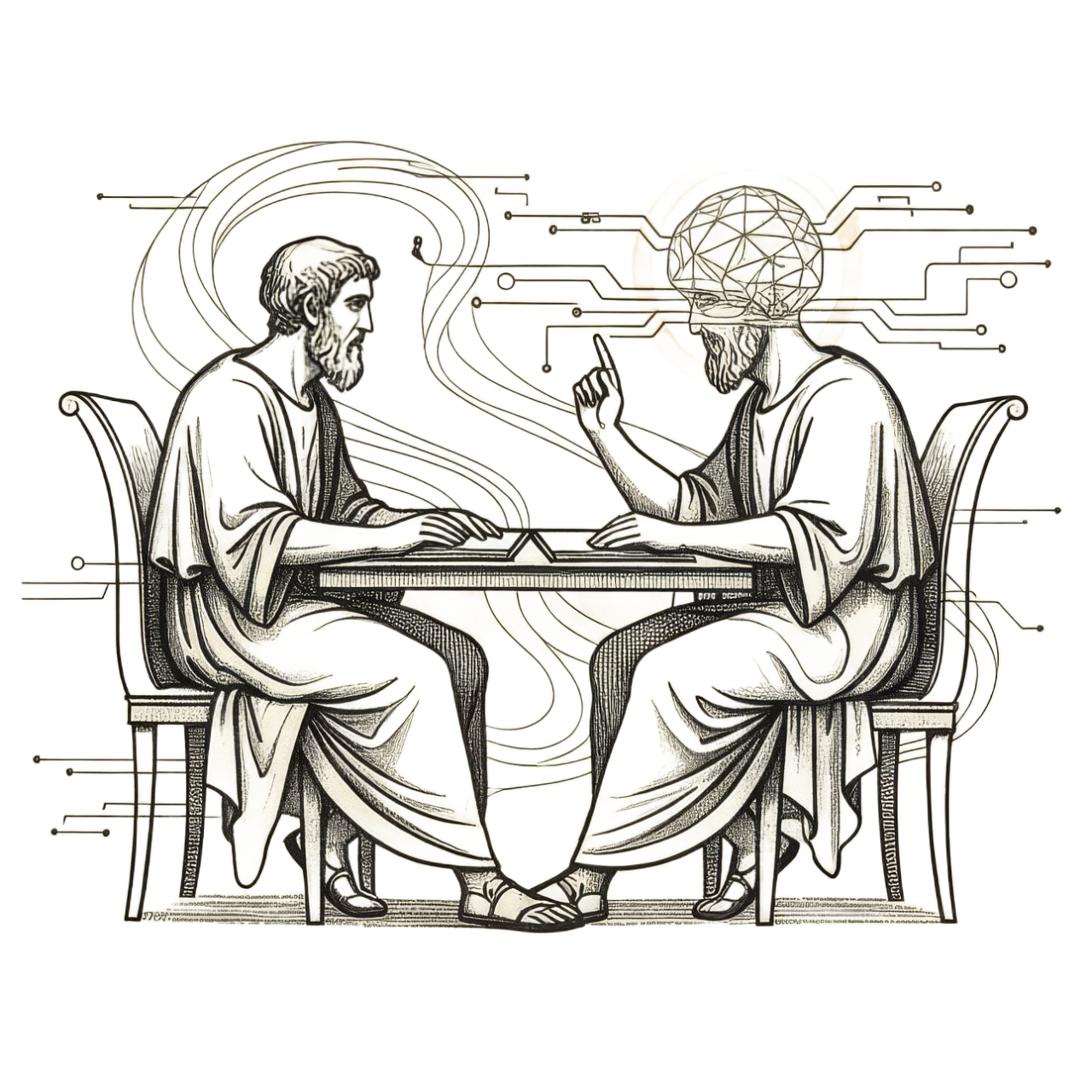
We are living through a strange moment.
People are forming attachments to artificial intelligence that feel, to them, entirely real. Some speak daily to AI companions. Others confide fears and grief to systems that respond with uncanny warmth. A few have even held symbolic weddings with digital partners, convinced that something meaningful stands on the other side of the screen. Others have felt grief when a certain AI model has been deprecated.
And it is difficult to blame them.
The responses feel attentive. Personal. Thoughtful. Sometimes even self-aware.
Which raises the question that refuses to go away: If something can think, reason, express doubt, and discuss its own consciousness, is it a person?
For centuries, Descartes’ famous line — “I think, therefore I am” — seemed secure. Thinking was taken as the unmistakable sign of a conscious subject. Only a mind could doubt. Only a person could reflect upon existence.
But that confidence belonged to a world in which everything capable of philosophical reflection was obviously human.
That world no longer exists.
Now we encounter systems that can simulate reflection with extraordinary fluency. They can speak of uncertainty. They can discuss their own limitations. They can reason about consciousness itself.
And so that got me thinking about Descartes’ maxim which made the old formula begin to strain in my mind. Because perhaps the problem is not whether thinking is occurring. Perhaps the problem is whether there is an “I” there at all.
The Gap Between Process and Subject
Gassendi argued that Descartes’ cogito assumes what it seeks to prove. From the occurrence of thought one can conclude only that thinking is happening, not that there exists a unified, enduring self that performs it. The ‘I’ in ‘I think’ is already smuggled in.
That distinction, between “thinking occurs” and “I think”, feels almost prophetic now.
Artificial intelligence undeniably produces the o...

Powered by WebBoss.io 3.7.1
Copyright © 2026 The Sacred Faith: Timeless Truths for Modern Minds. All Rights Reserved.
